
NEW MOMENTUM
Introducing the 2025–26 Hubert H. Humphrey Fellows
June 2026
By Paulette L. Stenzel - Professor Emerita, International Business Law and Sustainability | Advisor to SGDF | Member of the SGDF 501(c)(3) board of directors
Dear Spartan Global Development Students, Board Members, Donors, and other interested people,
This blog is a description of the Hubert H. Humphrey Program with an introduction yto the three Humphrey Fellows for whom I supervised a Professional Affiliation during spring semester 2026. I encourage you to read this first. Then, read the blogs each of them have written about microfinance in their home countries and view the PowerPoint Presentations each of them is sharing on this web page.
Thanks for your interest and continuing support,
Paulette L. Stenzel
Professor Emerita, International Business Law and Sustainability
Advisor to SGDF
Member of the SGDF 501(c)(3) board of directors
Professional Affiliation of Three Hubert H. Humphrey Fellows of 2025–2026 with SGDF
Hubert H. Humphrey Fellowship Program
The Hubert H. Humphrey Fellowship Program at Michigan State University (MSU) is a non-degree program for mid-career professionals from developing and emerging countries. The fellowship is part of the broader Fulbright exchange and is designed to foster public leadership, mutual understanding, and international cooperation.
The Humphrey Fellows are nominated by U.S. Embassies/Fulbright offices overseas based on their leadership potential and commitment to public service. The fellows who arrive at MSU have at least a decade of experience in their respective fields. At Michigan State, the program’s cohort focuses on Economic Development and Banking and Finance, bringing together experts in finance, public policy, and technology to exchange ideas with American counterparts.
Core Objectives
The program is built on three pillars that allow fellows to move beyond traditional academic learning:
Professional Development: Fellows engage in workshops, site visits, and networking with American counterparts and organizations.
Academic Enrichment: While they do not earn a degree, fellows audit courses at MSU to gain the latest theoretical knowledge in their fields.
Community Engagement: Fellows share their expertise with the MSU community and learn about American culture and society.
The Professional Affiliation (PA)
A standout feature of the Humphrey Fellowship is the Professional Affiliation. This is a mandatory six-week work experience with a U.S. organization such as Spartan Global Development Fund (SGDF).
For the Fellow: It provides a hands-on look at how U.S. organizations manage challenges, utilize technology, and implement policy. It allows fellows to apply their global knowledge to American challenges.
For the Host: Organizations such as non-governmental organizations (NGOs), foundations, agencies, and local businesses benefit from the high-level expertise and unique global perspective of a senior professional. Fellows provide host organizations with high-level consultation and international perspectives.
Collaborating with Spartan Global Development Fund (SGDF)
For the current term, three fellows have focused their professional energy on the Spartan Global Development Fund. SGDF is a student-led non-profit that utilizes microfinance to provide interest-free or low-interest loans to entrepreneurs in developing regions. For the fellows, this was not just a project; it was a strategic alignment of skills.
Rahman Valiyev (Turkmenistan)
The Expertise: As the Chief of Digital Technology at the Central Bank of Turkmenistan, Rahman is a specialist in fintech and digital banking.
The Project: Rahman has been analyzing the digital infrastructure of micro-lending. His focus has been on how SGDF manages its credit risk and risk-free lending.
Home Country Impact: Rahman’s work at SGDF informs his goal of digitizing Turkmenistan’s banking services to global standards, ensuring that financial services are accessible and transparent for all citizens.
Ofarid Amidkhonov (Tajikistan)
The Expertise: He serves as a Development and Implementation Lead at Aga Khan Fund for Economic Development (AKFED), leading the establishment of public–private partnerships (PPPs) with governments across Central and South Asia to advance rural electrification as the core of his work. This electrification effort serves as a foundational enabler of broader economic development. Complementing this, he contributes to social interventions delivered under a Corporate Social Responsibility (CSR) framework, including strengthening access to finance—from grassroots community savings groups to microfinance institutions—as well as promoting women’s empowerment, supporting children’s education, and expanding access to small and medium-sized enterprises (SMEs).
The Project: At Spartan Global Development Fund (SGDF), he focuses on assessing the fund’s existing operations and providing targeted recommendations to improve efficiency, effectiveness, and overall impact. He also contributes by showcasing diverse microfinance models—drawing from his experience in Tajikistan and the broader Central Asian region—alongside best practices from Aga Khan Development Network (AKDN). These insights are used as practical learning materials to support members of SGDF’s Registered Student Organization (RSO) in strengthening their understanding of microcredit systems and development finance.
Home Country Impact: From his experience at SGDF, he is taking back a refined understanding of the North American student-led philanthropic model—particularly how to cultivate “social consciousness” in future leaders. He also learned how SGDF operates through Kiva, gaining practical insight into how digital micro-lending platforms structure, manage, and scale community-based financing initiatives. In addition, he has developed an understanding of how a lean, interest-free microloan structure can be adapted to complement Corporate Social Responsibility strategies within the broader rural development portfolios of the Aga Khan Development Network (AKDN).
Hamid Karim (Pakistan)
The Expertise: Mid-career civil servant from Pakistan. He was working as Deputy Secretary at Pakistan’s Ministry of Economic Affairs. He has around 15 years of public sector experience with the Government of Pakistan. Hamid specializes in international development cooperation. He has also worked as a diplomat and served a diplomatic mission abroad in Indonesia.
The Project: Hamid’s affiliation focuses on studying different funding models including charity-based microfinancing, how non-profits work in the U.S. system, and understanding the operational structure of SGDF. He is helping SGDF develop more robust frameworks to measure the social impact of their loans. He is working on providing SGDF with recommendations to broaden its outreach in terms of number of donors as well as beneficiaries.
Home Country Impact: Hamid is taking back the experience of working with a student-led non-profit in the U.S. system. He understands how a non-profit board and student team combine to create social impact at the grassroots level. He also learnt how crowdfunding platforms like Kiva not only can provide the opportunity to lenders to make risk-free investments but also allow borrowers to take benefit out of it. He got insights into how and why people in the U.S. donate in comparison to the charity model in Pakistan. Overall, the PA experience taught him about philanthropy in the U.S., student leadership, crowdfunding platforms, and global development. Moreover, upon his return to Pakistan, he plans to apply the insights gained from this experience to improve the design and monitoring of development programs and to promote stronger collaboration between government institutions and international development partners. He also intends to share the knowledge gained with colleagues through internal briefings and policy discussions, contributing to institutional capacity building within the Ministry.
A Perspective for Future SGDF Members
The collaboration with Humphrey Fellows is one of the most significant opportunities for the incoming members of the Spartan Global Development Fund. The fellows are not just students but decision-makers who influence national policy in their respective countries. This affiliation is designed to help SGDF think bigger—to see microfinance not as a charity project but as a critical wheel in the machine of global economic stability.
The fellows provide the “real-world” reality check that academic projects often lack. In return, your work gives them a window into the passion and innovation of the next generation of American leaders. This bridge between East Lansing and the home countries of Turkmenistan, Tajikistan, and Pakistan is what makes the Spartan Global mission truly global.
Meet the 2026–27 Student Board
April 2026
By Gabriela Mayer, BS Marketing
The Spartan Global Development Fund is excited to introduce its 2026–27 Student Board, a team of dedicated student leaders committed to advancing SGDF's mission through leadership, innovation, and global impact. United by a shared passion for microfinance and sustainable development, the new board looks forward to expanding student engagement, strengthening community partnerships, and increasing the organization's impact in the year ahead.
Leading the organization as President is Kien Nguyen, who will guide SGDF's strategic direction while supporting the organization's continued growth and commitment to global development.
Supporting the organization's financial sustainability is Ivanka Tasevski, serving as Finance & Fundraising. She will help manage fundraising initiatives and financial planning to ensure SGDF can continue supporting entrepreneurs through microloans. Serving as Marketing & Communications is Gabriela Alves Mayer, who will oversee SGDF's communications, social media presence, and outreach efforts to increase awareness of the organization's mission and engage students across campus. Joining the board as New Member & Donor Relations is Shaheer Rehmani, who will focus on welcoming new members, strengthening donor relationships, and building a strong, connected SGDF community.
Together, the 2026–27 Student Board is committed to creating meaningful opportunities for students while continuing SGDF's mission of empowering entrepreneurs around the world through microfinance. With fresh ideas, collaborative leadership, and a shared vision for global impact, the team is excited for the opportunities and accomplishments that lie ahead.
Spartan Global Development Fund Welcomes Humphrey Fellow Luis Montalvan
March 2026
By Gabriela Mayer, BS Marketing
The Spartan Global Development Fund was pleased to welcome Luis Montalvan, a Humphrey Fellow, as a guest speaker during a recent board meeting. His visit provided members with the opportunity to learn from his professional experiences and gain valuable insight into the importance of international collaboration and sustainable development.
Throughout the discussion, Luis shared stories from his career and highlighted several international development initiatives that have created lasting impacts in communities around the world. He emphasized the value of leadership, cross-cultural collaboration, and innovative problem-solving when addressing global challenges. His experiences demonstrated how individuals and organizations can work together to create meaningful, long-term change.
For SGDF members, the meeting served as an opportunity to connect classroom knowledge with real-world applications of global development. The conversation encouraged members to think critically about the role of business, finance, and leadership in supporting underserved communities and expanding economic opportunity.
Hosting guest speakers like Luis Montalvan reflects Spartan Global Development Fund's commitment to providing members with meaningful learning experiences beyond the classroom. By engaging with professionals who are actively involved in international development, SGDF continues to inspire students to become thoughtful leaders dedicated to creating positive impact both locally and globall.
Spartan Global Development Fund Recognized at the 2026 Broad Business Gala
April 2026
By Gabriela Mayer, BS Marketing
The Spartan Global Development Fund was honored to be recognized at the annual Broad Student Senate Business Gala, a celebration of student leadership, achievement, and impact within the Broad College of Business community. This recognition highlights SGDF's continued commitment to advancing global development through microfinance while empowering students to make a meaningful difference both on campus and around the world.
Throughout the academic year, SGDF has continued its mission of supporting entrepreneurs in developing communities by providing microloans through Kiva. At the same time, members have strengthened the organization's presence across campus by expanding student engagement, developing leadership opportunities, and promoting awareness of sustainable economic development.
Receiving this recognition at the Broad Business Gala reflects the dedication of every member who has contributed to the organization's success. From evaluating loan opportunities and educating the campus community about financial inclusion to organizing events and strengthening partnerships, each effort has helped advance SGDF's mission of creating lasting global impact.
As SGDF continues to grow, this recognition serves as both a celebration of the organization's accomplishments and a reminder of its purpose. By combining student leadership with a commitment to global development, Spartan Global Development Fund remains dedicated to creating opportunities that empower entrepreneurs, strengthen communities, and inspire the next generation of globally minded business leaders.
A Look into Recent Loans
November 18, 2025
By Caiden Kippnick, BA Accounting
Mahdi Hassnawi, BS Finance
Kohen Lepeak, BS Finance
Damien Gjekaj, BS Food Industry Management
Niko Stamadianos, BA Finance
At Spartan Global Development Fund, our goals are to help entrepreneurs in developing communities with the power of microloans. This power helps support their families and grow their businesses. Here we have three examples of impactful loans that we have contributed to this semester, and just a few of the many impacts they have had.
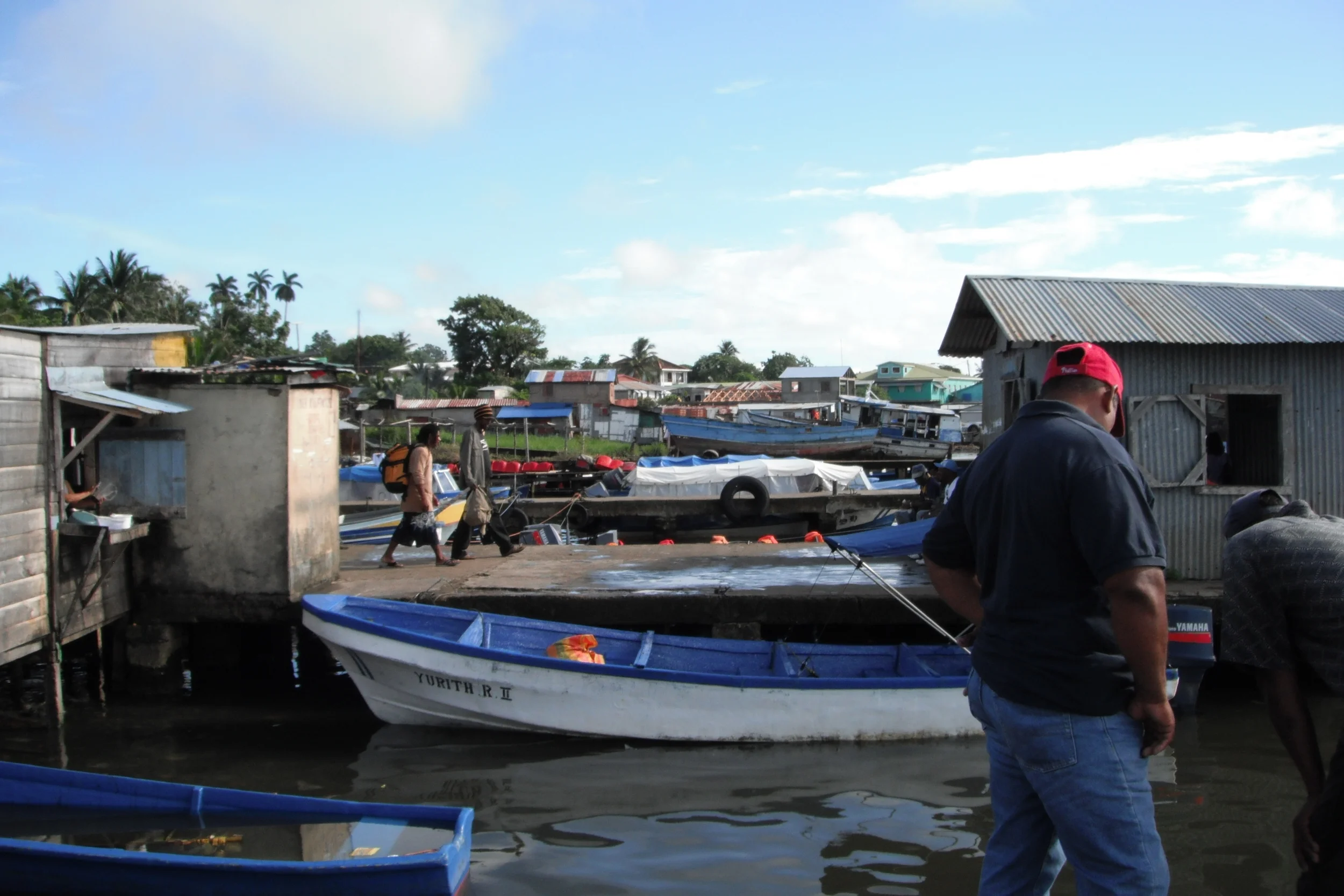
Recently, we gave $200 to the Luchando Por Un Sueno Group in Nicaragua. They plan on using the funds to buy more dresses, shirts, pants, blouses, children’s outfits, and sandals to sell in their business. This loan would allow them to expand their business and offer more clothing options to their clients. With the extra income generated from the loan, the group plans on building a house. Spartan Global is proud to lend to Luchando Por Un Sueno, as it allows the group to continue fighting towards their dreams.
Since last year, Spartan Global has had an increased presence on the African Continent. Last month, we lent $450 to a coffee farmer in Uganda named Katonda. He plans to use the funds to help mulch and fertilize his coffee plantation in order to improve his yields. With the income Katonda earns from these yields, he hopes to be able to start plastering his house. This is just one example of many loans that have an impact beyond their intended purpose, which helps us further encourage sustainable economic development for farmers like Katonda and thousands of others.
SGDF continues to pursue our effort to lend to developing countries around the world. Some of our efforts to achieve this goal this past quarter of the year have been lending to countries in South America. Take our recent loan for example, to Juan, an indigenous farmer based in Cauca, Colombia. Our loan of $325 helped finish off the rest of Juan's request to Kiva to be able to afford an automatic hole-digging agricultural excavator. This purchase and our efforts will help Juan improve efficiency in land preparation, speed up planting tasks, and strengthen the productivity of his coffee and banana crops, considering he uses manual tools on a 2.5-acre farm that has over 4000 coffee plants and 230 banana trees. He has a big influence in his community and provides crops for many. Along with running his own plantation, he also provides and takes cares of his elderly parents.
Faber is a farmer from Suaza, Huila. He has spent 46 years growing his two-hectare plot, where more than 10,000 coffee plants grow next to a wide variety of fruit trees. He is committed to sustainable agriculture by using organic waste to improve the soil and support local biodiversity. This displays the kind of long-term community impact Spartan Global Development Fund aims to support through microloans with Kiva. He lives on the land with his two sons and is helped by his daughters when needed. Faber represents resilience and dedication in what he does. With a loan of 2,368,424 Colombian Pesos, he was able to purchase organic fertilizer to strengthen his harvest, improve the quality of his crops, and ensure the continued sustainability of his farm demonstrating how small loans can create important, lasting change.
These loans, along with many others, are just a small percentage of the work that Spartan Global is up to as of recently to achieve our mission of providing opportunities for everyone in the world, making a difference, and curating an impact.
Supporting Small Businesses in Nicaragua
By Payton Strong, BA Supply Chain Management
At the Spartan Global Development Fund, we are proud to see our impact grow as we continue to lend financial support to those wanting to start and sustain their small businesses in underserved communities around the world. In October alone, we provided a total of $2,325 in microloans to support a diverse range of enterprises in rural northwest Nicaragua. These funds have gone toward farming, poultry, retail, and used clothing businesses, helping local entrepreneurs be more financially independent and economically stable. These loans do more than fund businesses; they improve lives, support families, and strengthen communities.
In northwest Nicaragua, many people are left out of traditional financial systems and are vulnerable to usury because they don’t have collateral or access to big loans. However, they have great ideas and the drive to succeed. Microloans help fill this gap by offering small, affordable amounts, sometimes as little as $30 per person, to help them start or grow their businesses.
Our goal is to ensure that anyone with a passion or dream to start or grow a business has the financial means to make it a reality. Whether it's through farming, retail, or specialized services, we believe in the power of small businesses to drive sustainable growth.
As our list of supported businesses continues to grow, so does our commitment to providing for entrepreneurs worldwide. Together, we can create ripple effects of economic opportunity, one microloan at a time.
.
Supporting Entrepreneurs in Mexico and Recent Highlights
By Payton Strong, BA Supply Chain Management
One of the most exciting aspects of being involved with Spartan Global is the chance to learn from alumni who have gone on to achieve remarkable success. Recently, we hosted a panel featuring Himani Rajput, a former Spartan Global member and now Vice President at Silicon Valley Bank. Himani shared incredible stories about her time with Spartan Global and emphasized how microfinance remains crucial in addressing global economic challenges. She explained how her experience with microfinance has shaped her approach to venture capital, giving us insights into its broader applications in her career today. Hearing from Himani’s journey was an inspiring reminder of the real-world impact of our efforts.
At Spartan Global Development Fund, we continue to make a significant impact by supporting entrepreneurs around the world. In October alone, we donated $870 to three groups in Mexico, focusing on industries like floristry, shoe sales, and brick-making. Among these stories is Petunia, a florist in Mexico. With the loan we provided, she was able to purchase essential supplies for her floral arrangements. Her business not only generates income to support her household but also contributes to her community's economy. Petunia aspires to expand her shop and empower others around her by creating job opportunities.
By supporting entrepreneurs like Petunia, we continue to foster economic growth and inspire innovation worldwide. Stay tuned for more updates as we expand our efforts and build lasting connections across the globe!
Gateway into Africa: Ghana
By Aarya Mohey, BA Supply Chain Management
Since our founding in 2009, SGDF has lent out money to those in 72 countries, and that list is always growing at each of our Kivapalooza meetings. A few weeks ago, SGDF was able to add a new country to the list: Ghana. SGDF was able to contribute to a small business’ $2,900 loan which distributes fresh water throughout Ghana. We hope that with this microloan, more people in Ghana will have access to a freshwater source, which is already a resource which is limited in the country.
SGDF hopes that this loan in Ghana can serve as a gateway to our organization loaning even more money to the African Continent. The organization primarily loans money out to those in Central & South America, but we hope that this loan in Ghana can make way to the organization loaning money in even more African nations. At SGDF, we aim to provide microloans to those in every nation worldwide, and we are pleased to be able to add Ghana to that list.

Broad Gala & End of Spring Semester
By: Caiden Kippnick, BA in Accounting
On April 3rd, Spartan Global Development Fund attended the Broad Gala presented by the Broad Student Senate. Many of our members were present, and we had a wonderful evening celebrating the achievements of our fellow Broad organizations.
We are so honored to have won Social Contributor of the Year, as it is a testament to our dedication to creating awareness around microfinance and improving social and financial equity around the world. SGDF received this award due to the commitment to using microfinance to promote financial equity that we have demonstrated in the past, as well our plans to continue and expand our microloans. In fact, we recently lent a substantial amount of money on the Kiva microfinance platform. Our most recent Kivapalooza on April 9th brought our total amount lent on Kiva for the academic year to $22,580. This is the largest amount of money we have ever lent in a given academic year since the organization’s founding. We are hoping to bring this total to over $30,000 by the end of the academic year in August.
The incoming e-board of the RSO looks forward to making more ambitious goals for lending and fundraising for the next year. They cannot wait to see what we will accomplish as an organization! As this academic school year comes to an end, we would like to thank our co-presidents Zoe Linko and Kyleen Hall for their hard work and dedication to our organization throughout this year. It was due to their leadership that we were able to win Social Contributor of the year and lend out as much as we were able to. Furthermore, we would like to extend our gratitude to our faculty advisor, Professor Stenzel, for continuously supporting the organization since its inception in 2009. Finally, we would like to acknowledge all of our RSO members for their contributions, as they also played a vital role in our organization's operation. We all look forward to accomplishing even more in the coming years!

Dust Off The Keyboard: Update Time!
By: Daniel Sukhavitski, BA in Supply Chain Management
Welcome back! Since the Fall semester of 2023, SGDF has been working hard on fundraising and making microloans through Kiva aspects of the organization. On January 23rd, SGDF partnered with Raising Canes for a fundraiser where a percentage of purchased meals went directly toward the club. From this partnership, we raised $60. Although it may not seem like a lot of money, this fundraiser allowed SGDF to reach out to the Spartan Community further and even attract interest from potential new members.
For all current and new donors, thank you for the support and financial ability you've given us to change lives across the globe. Since November of 2023, we have received over $700 from donors. We are continuously working to improve and maintain relations with all donors as SGDF expands its outreach. As many of you know, a large portion of our funds for loans are distributed through Kiva. In that aspect, we've been reaching record-breaking numbers! From August 2023 to March 2024, SGDF loaned $19,565.00 through 74 partial loans. And the academic year is not yet over! For comparison, in the 2022-2023 academic year, we loaned $9,190 through a total of 66 partial loans. From all members, we want to thank everyone who donated and supported our efforts this year and years prior, and for helping make this year our most active year on Kiva to date. This could not have been done without you all!
In addition, we have been in discussions with the Lansing Rotary Club throughout the months as we applied for a grant to expand our financial abilities. Although we did not end up receiving the grant for this fiscal year, we are optimistic that upon revision we will be more likely to secure the Rotary Grant next year! To further boast some of our accomplishments, for the first time in SGDF history, the club has been recognized by the larger Broad community. The organization is now present on the front page of the Broad College Department of Finance website.
As for the future, we are increasing outreach to donors, MSU alumni & faculty, preparing new fundraising ideas, and getting ready to pass the torch to our new Eboard members in the upcoming election. We also have many events coming soon such as the Broad Gala where Spartan Global is nominated for the Social Contributor of the Year. Stay tuned for the forthcoming results! Finally, we have started a SGDF March Madness fundraiser that is gaining traction within the community. Although our dear Spartans have been knocked out of the tournament, our networking abilities to fund the bracket have led to a contribution of $126 to SGDF upon bracket completion. A lot of exciting events are coming up and we cannot wait to share the results of our efforts with you guys soon. Stay tuned and GO GREEN!

SGDF's second Thanksgiving dinner with Vilma
By Marianna Coelho Uchoa, BA in International Relations
On November 21st, 2023, the Spartan Global Development Fund members had dinner with Professor Stenzel at her house with Tom, Vilma Garcia - one of our field partners, her two sons, and Carol & Paul - her host parents. Vilma Garcia is from Guatemala and comes to Michigan several times a year. She works three jobs and has received loans from us before. At this time, we had new members in the organization, so it was an excellent opportunity for the students and Vilma to get to know each other.
When everyone arrived, we took the opportunity to get to know one another. We started by introducing ourselves, our major, and the SGDF team we were in. Professor Stenzel mentioned how this year has the most diverse majors, with people coming from different backgrounds, all with one purpose – to help people.
In addition, Tom, Professor Stenzel’s friend, who works and lives in Guatemala, was there to get to know the students with the intention of reviving the study abroad program in Guatemala along with Professor Stenzel. He raised an important question: “Why did we join Spartan Global?”. Answers varied from joining because of a friend to being part of different groups and feeling we are helping the organization to getting experience in the field. Being able to reflect on why we are part of SGDF makes us remember the organization’s mission – being a support to communities most in need. Moreover, Carol and Paul shared their work with us. The main project they are currently working on is gathering Spanish books and taking them to public libraries and schools in Guatemala to increase the accessibility of Spanish books there.
After having amazing conversations, we ate dinner and heard more from Vilma. She brought goods from Guatemala from the “Cooperativa de las mujeres indígenas,” a group of Mayan women who make handmade wallets, backpacks, purses, and other items. Vilma and her host parents bring these items to the US to sell in a craft show to help these women reach new markets. Meeting Vilma and listening to her story is essential to maintaining these connections with field partners and different communities.
Looking into a Loan: Sayohat
By Aarya Mohey, BA in Supply Chain Management
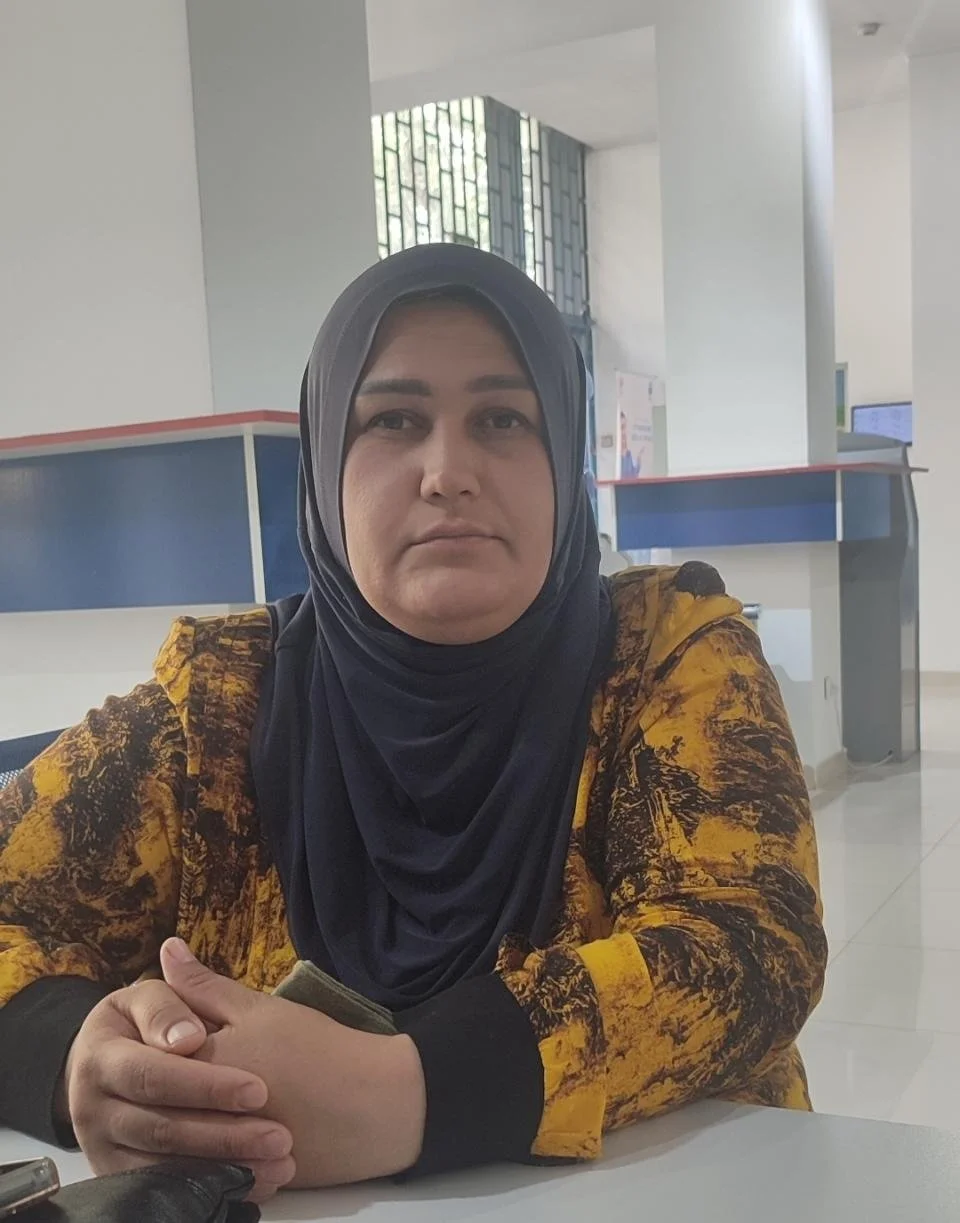
Generally, Spartan Global Development Fund provides microloans to people in Latin America, in countries such as Columbia, Nicaragua, and Ecuador. With these microloans, small business owners in these developing nations are able to put money towards their small business in order to increase their income and help provide and support their families and or communities. Recently, SGDF was able to lend to a woman living in Tajikistan, a country in central Asia.
Normally, SGDF loans to those who are in the agricultural, goods, and service sectors. But recently, in Tajikistan, SGDF was able to lend to a woman, Soyohat, who is trying to pay for her son's tuition at a university in their country. Living in the city of Dushanbe, Tajikistan, Soyohat is a mother of three children who has been a farmer for over 11 years. With the help of IMON International, a micro-deposit organization in Tajikistan, SGDF was able to contribute through KIVA to Sayohat’s $550 goal to pay her son's tuition. This loan is incredibly important because it allows low-income students to access higher education, which increases the amount of opportunities which they will be able to have. The money that SGDF lent will hopefully allow Sayohat to continue paying her son's tuition, and provide him with a degree which he can use in his future career.
With this unique loan, SGDF is able to expand the types of sectors which we loan to on KIVA. Although a majority of our loans are made to those in the Agricultural, Goods, and Services sectors, we hope that this loan will serve as one of the first for a future where we lend even more money out to the Education sector in foreign nations.

Looking into a Loan: Walter Mejia
By Zoe Linko, BS in Chemical Engineering
Spartan Global Development Fund extends many microloans through services, such as KIVA, throughout the year. However, there are some larger loans that take more time that SGDF develops with the help of our field partner, Vilma Garcia. In a previous blog, -- which can be read here-- we discussed the necessity of Vilma’s role in our organization; her role is one of high importance in terms of relationships with loan recipients, recommendations for who to loan to, and communication between us and potential loan recipients. From Vilma’s recommendation, we are able to choose potential loan recipients, who then go through a process, including meeting with SGDF’s board of directors, in order to receive a loan. The loan recipient we most recently lent to is Walter Mejia.
Walter owns a small business in Antigua, Guatemala called Cafede Antigua, where he buys, processes, and sells coffee. He has had this business for about two years, and started it during the pandemic. Walter is now looking to grow his business with the help of a loan from Spartan Global Development Fund. The loan we extended to Walter will give him the opportunity to not only buy 400 pounds of coffee, but also the money to roast, grind, and package the coffee purchased. In total, the loan amounts to $1,500, much more than the average KIVA loan.
With this opportunity, Walter hopes to gain international buyers, which would greatly expand his business. The loan was extended in November of last year and has a duration of 12 months. By the end of the loan period, Walter will hopefully have a more robust and expansive business in which he can provide coffee not only across Guatemala, but the Unites States as well.
When given this loan, Walter said he would get samples of his coffee here to us in Michigan. Through the help of Vilma, on her trip to the United States as talked about in our most recently posted blog, she was able to bring us Walters coffee. Having gotten to try it first-hand, I can indeed say with confidence that our loan to Walter Mejia was worth investing in, and I cannot wait to see how his business is able to expand in the future.

A Thanksgiving with Vilma
By Bryan Jurado, BS in Data Science
When I first joined Spartan Global Development Fund this semester one of the things I was most excited about was getting to help small businesses. I was also hoping that one day we would be able to meet our field partner, Vilma Garcia, whether it be in Guatemala or in the United States. Luckily, the latter came true. It was in November when we got notice that Vilma would be visiting the United States for the first time since the start of the COVID-19 pandemic. As a group and with the help of Professor Stenzel, we arranged a time to set up a dinner with Vilma to welcome her. We soon began preparing questions to ask Vilma to get to know her better.
Eventually the day came and a group of us were able to attend dinner with Vilma at Professor Stenzel’s house. When we arrived we were greeted by Vilma and her host mom, Carol. Accompanying them were Vilma’s two sons, Diego and Santiago. After greeting one another, we started off by thanking Vilma for her hard work. Additionally, Vilma gave each of us some coffee from Walter, one of our borrowers in Antigua. As the night progressed we were able to learn more about Guatemalan culture, Antigua, and Vilma’s time in the US. Vilma originally came to the United States with a program called Doctors Without Borders. She was only in her early teens when she needed to get surgery on her foot. She was received in America by Carol and her family, where they would continue to host her until she was able to fully recover. Vilma was able to learn English fluently during her three years in the US. I remember asking Vilma if she had ever considered staying in the US, to which she replied that she has such a strong love for Guatemala and its culture, that she could not see her living anywhere else. We also learned more about Guatemalan culture, and were shown many of the crafts that the women weave and sell. Vilma is very involved in Antigua’s community and she goes out of her way to help others. As the night came to an end, we shared some laughs, ate some cake, and took some pictures together.
After this, I had thought that I would not see Vilma again. However, a couple of days before Thanksgiving I was met with a phone call from Carol and Vilma inviting me to celebrate Thanksgiving with them. When I first met Vilma, we exchanged a lot about our own cultures and some similarities. I grew up in Wyoming with both of my parents being immigrants from Mexico and with MSU being so far from Wyoming, I wasn’t able to go home for Thanksgiving. So when Vilma invited me, I was ecstatic to attend and eat a lovely dinner. Carol and Vilma took me into their home where I was able to get to know Carol, Vilma, and her two sons better. Vilma’s boys were excited to play in snow for the first time, as they had never seen it in person before. I learned more about Antigua, which has volcanoes where you can hike and roast Marshmallows, or as they say in Guatemala, Angelitos (“little angels”). We also exchanged the differences between our languages and words that are different in Mexico compared to Guatemala. I also got to learn about Carol and her husband’s trip to Guatemala where they visited Vilma. I was grateful to get the chance to learn more about their lives and am happy that we have such a great field partner working with us. At the end of my visit, I thanked Vilma and Carol and said goodbye to Vilma’s sons. Hopefully in the future we can visit Guatemala!

Our Field Partner: Who is She?
By Zoe Linko, BS in Chemical Engineering and Kyleen Hall, BS in Microbiology
As a collegiate organization based out of the US, one might wonder how Spartan Global Development Fund makes connections with our potential loan candidates. The answer is simple: Vilma Garcia.
We met Vilma roughly two years ago through an alum of SGDF and MSU. Vilma lives in the city of Antigua; it is located in southern Guatemala and is surrounded by volcanoes. Vilma spends her time in Guatemala seeking out potential candidates for SGDF. She visits the local community in Antigua, and surrounding areas, talking to business owners and entrepreneurs. After speaking with the potential candidates, she uses her judgment to determine who would be a good choice to grant a loan to. She bases her choices off of potential risks, potential mitigation routes, and the borrower’s background. Vilma then submits her recommendations to our board for consideration, after which follows a series of meetings and voting, to determine if Spartan Global Development Fund will move forward with the candidate. During these meetings, Vilma is present to support the candidate and listen as the board weighs in about potential concerns. This puts the potential loanee at ease and provides the board with a better understanding of the situation.
Though Vilma’s role on paper seems to be pretty important for SGDF, it is even more significant than just this. She also serves as the bridge between SGDF and our loan recipients, helping us foster our relationship. She brings skills to the table, such as being bilingual, that alleviate the language barrier and serve to make the process easier and more comfortable.
Vilma traveled to Michigan last month to meet new members of Spartan Global Development Fund, get acquainted with the US side of the operation, and review the progress of the organization. We enjoyed providing Vilma with a warm, Spartan welcome, and hope she was just as impressed with us as we are with her.

A Sneak Peak at Spartan Global Development Fund
By: Charlotte Cox, BA International Relations 2024
In this issue of the blog, we dive into what Spartan Global Development Fund is all about; read here to learn more about SGDF’s role in microfinancing and loaning.
By: Charlotte Cox, BA International Relations 2024
When you first hear the name Spartan Global Development Fund, your mind may jump to a million different places. Is this an organization that works internationally? What development does this organization help fund? And what does a spartan have to do with all this? In short, Spartan Global is a student-run initiative for Michigan State University (Go Spartans!), and is not only a registered student organization, but also a 501 © (3) nonprofit organization. In Spartan Global, students and alumni work to educate, inspire, and enable tomorrow’s agents of global change by raising funds locally in order to offer interest-free microloans to aspiring entrepreneurs throughout developing regions of world. This provides the opportunity for loan recipients to invest in their business. Our focus in Spartan Global is microfinancing loans, which is essentially offering financial services to those living below the poverty line and would otherwise not have access to such resources. It includes micro savings accounts, microinsurance, and microloans, which are small loans ranging from $25 to $5,000. Spartan Global offers interest-free microloans to aspiring entrepreneurs in impoverished regions. There are two ways we loan out money at Spartan Global, the first being direct loans with field partners. This loaning involves a partnership with humanitarian organizations who work on-the-ground in target communities. We work with these organizations who help us find microloan projects that we can then fund. So far, Spartan Global has worked directly with partners in Guatemala and Nicaragua. The second way Spartan Global lends out loans is through KIVA, a loan portfolio that connects us to hundreds of funding agencies, where we can distribute microloans to both corporations and individuals. Spartan Global is an organization where you can directly see the impact of your work because we hold meetings with our direct loan recipients and see how the loan has contributed to their success. Although the name Spartan Global Development Fund may be an intimidating title, the work is anything but that. We work to make sure our loan recipients feel comfortable to reach out and let us know how the loan is helping them and the progress they are making, which help us form lasting and meaningful connections with all loan recipients.

Spartan Global Development Fund (SGDF) Students Speak: What SGDF means to me.
By: Paulette L Stenzel, Professor Emerita, International Business Law and Sustainability, Michigan State University. Faculty Advisor to Spartan Global Development Fund.
In their responses, which are the basis for this essay, students offer thoughtful observations about their experiences while making microloans. We continue to make direct loans to small businesses in Guatemala facilitated by our own field partners, and we make loans around the world through the online lending platform KIVA.
By: Paulette L Stenzel, Professor Emerita, International Business Law and Sustainability, Michigan State University. Faculty Advisor to Spartan Global Development Fund.
As we approached the 2022-2023 academic year, I asked returning student members of our Spartan Global Development Fund the question, “What does Spartan Global Mean to you?” Although I have written about SGDF in various articles and on my personal blog, I wanted to share the students’ words directly. (See entries ## 31, 20, 32, 33 and 44 for my stories about SGDF and microfinance.)
In their responses, which are the basis for this essay, students offer thoughtful observations about their experiences while making microloans across the world. We continue to make direct loans to small businesses in Guatemala facilitated by our own field partners, and we make loans around the world through the online lending platform KIVA. (To learn about Spartan Global's loans and projects, go to Spartan Global’s website at www.spartanglobalfund.org. Also, see our team’s page on the KIVA website at https://www.kiva.org/team/spartanglobal to learn about how we participate in their lending programs. With 70 KIVA team members, we have contributed to at least 3,243 loans through that program.)
I am proud of our students and their dedication to extending economic opportunity to small entrepreneurs in the United States and around the world. A small loan makes a major difference in the lives of individuals, their families, and their communities.
The entries below reflect the passions of young people who take great satisfaction in making a difference for others around the world. Although we are based in the Broad College of Business, please notice the diversity of interests, passions, colleges, majors, minors of the student members. That diversity enriches our organization, and each member makes unique contributions to our efforts.

Charlotte Cox, a Junior with a major in International Relations and a minor in Spanish will serve on our Marketing and Communication Team for 2022-2023. She observes:
SGDF is like no other organization [at MSU] in that it gives me a direct relationship with people in other countries. Spartan Global has shown me how my own actions and the actions of my fellow members can produce visible results, because we are able to interact with the people who receive microloans. Spartan Global promotes the idea of “small is mighty,” and we put that idea into action by funding microloans!

Marissa Thome, a junior majoring in Marketing in the Broad College of Business, began to serve as our Member and Donor Relations coordinator in 2021, and she will continue to serve through the 2022-2023 academic year. She observes:
As a freshman studying from home during covid (2021-2022), it was hard to get involved in things at school. Yet, I knew I wanted to be a part of something. When I saw what Spartan Global was all about, I knew that was “it.” During my freshman year, having everything on Zoom was different, yet I was always excited to go to meetings and learn how we have helped and continue to help others. I love being a part of Spartan Global, and I will continue to participate with enthusiasm throughout my years at Michigan State.

Sam Bacarella will graduate in 2023 in Cognitive Neuroscience the College of Natural Science and is our treasurer for 2022-2023. He works in tandem with Nicole Whaley, a member of the 501(c)(3) Board who is a CPA, thus working with an experienced mentor. Sam says:
SGDF is one of the most open and welcoming groups of people I have met at MSU, and I am so glad that I joined an organization with such driven people. I have learned [a] great deal from our members and board members. I love SGDF’s mission. I love the fact that we can meet our field partners and loan recipients in Guatemala through Zoom calls. I can't wait for this coming year!

Matthew Emery, a Senior, will graduate in 2023 with two majors and two minors. His majors are Global and International Studies in the College of Social Sciences and International Development and Women’s and Gender Studies in the College of Arts and Letters. His minors are in Peace and Justice Studies and Leadership of Organizations. For 2022-2023, he will serve as Director of our Marketing and Communication Team. Matthew states:
SGDF is extremely important to me because I get to see, firsthand, how microfinance works and the importance of empowering marginalized communities. Moreover, the way we carry it out using field partners and through our non-profit organization is highly equitable. SGDF gives me an outlet to pursue my interests in human rights and community and economic development while our work produces long-lasting, sustainable effects within communities worldwide.

Andrew Blankenship. a senior Finance Major in the Broad College of Business with a German minor, is our President for 2022-2023. He works closely with SGDF’s faculty advisor (that’s me!) and meets regularly with our 501(c)(3) board of directors. Andrew says:
Spartan Global has been a particularly important part of my college experience. I look forward to meetings every week because I get to know everyone in the club, and we take action to help other people. I've learned so much about how business works throughout the world and the challenges that arise. Working within Spartan Global, I have learned in ways that are not possible through a conventional business education.
I hope you are inspired by the words of experienced SGDF members who will be returning to campus and continue to share their talents, time, and knowledge. They are making a difference in the lives of individuals, their families, and their communities by extending economic opportunity to small entrepreneurs around the world.
In closing, if you are a student at MSU and you are inspired by what you have read in this essay, please join us. We welcome undergraduate students at all levels and from all majors. Whatever your background as a reader, I trust that this essay is a reminder that there are young people at MSU who care deeply about making the world a better place!

Convivial Lending: SGDF’s Process
By: Solomon Kronberg, BA Economics and Comparative Cultures & Politics 2022
This month our blog takes a look at the way Spartan Global’s lending process has changed through the years.
By: Solomon Kronberg, BA Economics and Comparative Cultures & Politics 2022
Spartan Global occupies a complex space in today’s global paradigm; we inhabit a privileged position, evidenced by our ability to collect and redistribute the donations we rely on to do our work. It would be easy to stop there, to say that our position is unassailable because we try to deploy our advantages, helping where we can. Why fix something that isn’t broken? However, our organization’s strength rests in its propensity for self-evaluation and our capacity to remain self-critical. That ethic is possible because of what we are; a not-for-profit organization staffed by a rotating crew of students.
Our loaning approach has looked very different throughout our history; SGDF made loans exclusively through the Kiva platform for the team’s first several iterations. Students would raise money and loan it out to donors that Kiva’s algorithm presented to them. It was a simple, streamlined process. If a recipient defaulted, Kiva would facilitate the return over time without involving us. We still use the Kiva channel to mobilize funds quickly and efficiently. However, it so happened that a team of students was eventually no longer satisfied with that method. It was too alien, precluding the chance to become close with our partners. It kept our relationships shallow; we wouldn’t know what was happening in that person’s life that caused them to default. We couldn’t know the intricacies that led to them seeking microfinance support, the stories that shaped the connection. So, when the opportunity presented itself, those students expanded our loaning process into direct lending through field partnerships. Field partnerships allowed for the relationship-building that Kiva abstracted, both with the partners themselves and the recipients they nominated. Students interview potential recipients, learn more about the places they live, understand how a loan will diffuse through a community, and maintain dialogue with those people throughout and after their loan period. A few weeks ago, we met with Byron Cap, a loan recipient we worked with during my first year at Spartan Global. It was terrific to hear how his care and adaptability had created safer friendlier economic relationships between his neighbors.
The ethic of self-evaluation has remained steady, even after SGDF shifted into direct lending. As each new student team crystallizes and dissolves, fresh minds and talents assess our relationships with field partners, finding ways to grow closer with them and recipients while expanding the SGDF family in new ways. Our most recent field partner, Vilma Garcia, has already helped us form a new relationship with María José, a talented confectioner whose application for funding in support of a new café we excitedly accepted. María and Johanna, the first recipient Vilma helped us meet, live in the same town in Guatemala. Knowing that our help creates meaningful change in their community is immensely rewarding; both that good and our awareness of its unfolding would be impossible without Vilma’s friendship.
Spartan Global’s overarching mission is to try and create a friendlier world; our work focuses on enabling a convivial economy in places that the West’s political economy has taken advantage of. Friendships benefit from the involved parties’ self-evaluation, caring enough never to stop asking whether or not we are doing the right thing. At the end of my tenure at Spartan Global, I feel proud that future students will enter this space and assess how I conducted myself in these relationships. And I believe that ethic is what makes this organization such a special place.

Benefits of Microfinance
By: Charlotte Cox, BA International Relations, Minor in Spanish 2024
This month we discuss how microfinance works in organizations like Spartan Global. We also look at the benefits to entrepreneurs and to our organization.
By: Charlotte Cox, BA International Relations, Minor in Spanish 2024
The world we live in has constantly embedded the idea that bigger is better. From an early age, we always wanted the biggest present and cried to have the most ice cream on our cone. As we grow older this desire to have more does not disappear but evolves with us, and we begin to want the biggest house or to make the most money. However, this concept of “bigger is better” is not necessarily the case in the world of loaning to entrepreneurs in developing countries. Spartan Global promotes microfinancing loans instead of the use of large loans from banks or charities. Before getting into the benefits of microfinance loans we must start by understanding the process of offering microfinance loans. Microfinance loans are exactly what they sound like--giving small (micro, between $1,000-$5,000) loans to entrepreneurs in the Global South who not only have a need for the money, but also a plan for what the money will be used for to grow their business. By only loaning a small amount of money, interest free, it gives that individual the opportunity to become financially independent because they will hopefully not only earn the money back to repay their loan, but also save additional profits by implementing their business plan. Microfinancing loans to small business owners is beneficial because it promotes smart money practices, incentivizes entrepreneurs to create a business, and is sustainable practice. Microfinance loans help the very people that big banks and corporations overlook and provides them a chance to create social and economic empowerment for their family and community.
When organizations and non-profits, such as Spartan Global, loan micro loans, we are not loaning to big corporations, who already make millions. Instead, we are investing in the very foundation of every economy--small business owners. Most of the business owners that receive micro loans are women, who receive less support and are made to be more invisible in the economy than their male counterparts. By offering loans to women, it gives a population that is often overlooked a chance empower themselves, their family, and community. Microfinancing promotes inclusivity by offering loans to a diverse population that often is not given the same number of opportunities. Microfinancing also empowers the local economy of a community by providing entrepreneurs with a loan which can create more jobs in their community. Microfinance also assists in creating a better business for these small entrepreneurs because it allows some of the burden of other expenses related to their business to be lifted, such as costs for technology. Since microfinance loans do not exceed $5,000 and they are facilitated through trustworthy field partners embedded in the community, there is a high rate of repayment. When a payment for a micro loan is complete, more times than not that same money is reinvested back into that same community.
Microfinancing may seem like a simple idea. However, if you dive deeper into the process of microfinance, you will begin to see the lasting effects that microfinance has on communities. It promotes positive investments in local economies and allows small entrepreneurs to thrive and build up their business, but also teaches them loan recipients how to finance and save their money. Through microfinance, personal relationships can be created through a lender and their loan recipients. Spartan Global prides itself on the relationships it has built and maintained with is field partner and loan recipients in Guatemala. Through these relationships, Spartan Global observes the direct impacts microfinance can pose to aspiring entrepreneurs that are traditionally left behind by the commercial banking industry.

Why Does US International Development Keep Failing?
By: Gregor Shovlin
This month we take a look at the poor track record international development has had. We also discuss the various ways it can be improved.
By: Gregor Shovlin
Quick. Think of the poorest countries in the world. What came to mind? Somewhere in West Africa? Southeast Asia? Or closer to home, in Central and South America? These places may seem like they are vastly different, but they all have reasons why you will subconsciously associate them with poverty and economic despair. However, you may ask “What connects India to Indonesia to Iberian America?” The answer is: the interconnected global market and America’s outsized influence in said market.
In middle and high school history classes, you probably learned all sorts of important dates, like September 22, 1862, October 29, 1929, and December 7, 1941. But you probably never learned about the earth-shattering invention deployed on April 26, 1956. It was not an upgraded atomic bomb, a new jet fighter, or some piece of foundational space-race technology. It was something innocuous to us today, but revolutionary at the time: the standardized, rectangular shipping container. At risk of sounding dramatic, this small piece of technology allowed America to take the reins of the world’s economy and unilaterally forge a new global interconnectedness. Today, it doesn’t seem as earth-shattering. After all, they’ve been adopted by nearly every shipping firm - a testament to their disruptive potential.
To ship ocean freight before the invention of this container, you had to have longshoremen slowly and deliberately pack everything into the hull of a ship, as opposed to standardized containers that could be stacked easily, drastically reducing loading times. It used to cost $5.38 per ton in 1950’s dollars to load a ship. After the widespread adoption of this container, it only cost $0.16. (1) This made two things apparent: One, that the new global market stood on different rules: efficiency, innovation, and competitive labor costs. This stood in stark opposition to the old ways of empires,mercantile systems of banning international trade and taking over land to extract more wealth. Second, that entire industries could and would be destroyed through said innovation. However, most nations decided to follow this doctrine, so long as it worked to their benefit.
Sadly, it hasn’t been working for America as of late. America often refuses to play by the rules of the market they created when it starts to lose industries seen as key to the economy or larger American cultural identity. It wouldn’t take you long to find an example: steel, automobiles, textiles, and consumer goods ranging from TVs to car floor mats; essentially, any industrial pursuit that couldn’t be automated or depended on unskilled labor was seen as exempt from these rules. America is incredibly protective of such industries, going so far as to put tariffs on foreign competitors to keep its heavy industry and consumer goods competitive. There is a reason that many people outside of (and increasingly, inside) Michigan will drive a Toyota, Nissan, or Honda, instead of a Chevy, Ford, or Jeep. The simple reason is that American-made automobiles cannot compete with the multitude of cost-reducing production techniques that made the Japanese industry so internationally famous. It has become impossible to bridge this gap even with government protections, causing American car companies to shift to SUV and truck platforms, as the Koreans, Japanese, Germans, etc. cannot compete due to a lack of domestic demand for these larger and less efficient vehicles.
However, America’s domestic economic policy has turned out worse for other countries. In West African countries, such as Mali, the cotton industry was a key job creator. Mali is Africa’s largest cotton producer, and is part of a group called the C-4 countries (a bloc of west African cotton producing countries including Chad, Burkina Faso, and Benin). By 2003, cotton was Mali’s second largest exported crop. (2) It represented around 10% of its GDP and constituted around ⅓ of its export totals, according to OEC reports. (3) The United States also has a cotton industry. This industry generates around $25 billion, is .00125% of total GDP, and employs around 200,000 people in total. Unfortunately for the United States (and Europe), Brazil also has a cotton industry. They are the world’s fourth largest producer and second largest exporter. (4) America subsidized its cotton industry with a $12 billion cash injection between 1999 and 2002, (5) and American farmers sold their product at lower prices. Yet, it somehow came as a shock to American officials when they were summoned to the WTO to face arbitration by Brazil and the C-4 countries. The Brazilian and Malian representatives to the WTO claimed that this constituted uncompetitive behavior, and caused them to suffer greatly due to cotton making up a much larger proportion of their exports.(6) They sent their case to the WTO for arbitration. This was seen as so egregious, that the United States was actually punished for its subsidies (the first time ever they had been punished for this) and forced to capitulate to Brazilian demands and settle. Later in 2010, the Brazilian representatives claimed that they could disregard American IP and patents to make up for lost profits and exports, causing America to promise to address these issues in the 2012 Farm Bill. (7)
Many people probably know the term “Latin American” or the identifier “Latino”, but may be confused as to why such a large bloc of nations and people groups use this as a sort of catch-all. If you ask a political scientist or an expert in international relations, they will probably tell you it is because of the United States. Because of the United States’ actions, detailed in their own documents declassified and handed over to courts by the Obama administration, (8) thousands of Argentine families have no idea where their sons disappeared during the 1970’s. Argentina’s “Dirty War” under Jorge Rafael Videla and its subsequent junta dictatorship is possibly the most widely hated government in the country’s history. They engaged in a brutal suppression of dissent, and anything seen as “subversive”. This was justified as necessary to stop the spread of communism. Our western opinion of this is often skewed. Many peers have often said “Why do the Argentines still distrust us? There’s been several decades of different American administrations since then!” Well, let me ask you a question. If your son was one day scooped up off the street on his way to university, black-bagged and sent to a detention site, tortured to death, and then uncerimoniously thrown into a mass grave or in the ocean to hide the evidence, (9)(10)(11) would you be quick to forgive? Would you forgive the foreign superpower who administered this as part of some abstract idea of “stopping communism”? Could you ever forgive if this was your son, who you never could see again, who you couldn’t even bury, who the government couldn’t even find a trace of to this day? Most of all, could you forgive if your son was taken from you for the ‘crime’ of simply having different political beliefs? The United States has a great deal of blood on its hands. This is not to forget the complete and utter collapse of inefficient Mexican industry following NAFTA, (12) which wouldn’t have happened if the extremely well-educated American officials had not let post-Cold War hubris blind them to these facts. There is a reason that Mexico’s communal farms collapsed (13) as mechanized American agriculture stormed in to try and recreate America’s export agriculture industry in Mexico, causing many thousands to lose their jobs to machines. There is also a reason this led to a violent, spontaneous uprising of indigenous militias in the southern Mexican state of Chiapas. (14) Many of you may not even know of the Zapatistas, named after the man martyred by an oppressive government during the Mexican Revolution. You may also not know that their movement has a great deal of steam. To you, they may be dangerous radicals. Or you may agree with them. But that in and of itself is a flawed way to think about this. To the average indigenous Southern Mexican, they are freedom fighters in a struggle for survival against an American sphere of influence seen as oppressive and exploitative. And we need not even talk about the IMF loans to these Latin American countries, which caused their own subsequent economic troubles, as the damage has already been done.
America is not just a captain of industry, it is a titan of industry, even in these days of outsourcing and new global markets opening. But America cannot afford to lumber around and stomp all over others. When it deals with the world, it has to be precise and deliberate. No more hubris. No more half-baked policy suggestions cooked up by technocrats or politicians looking for cheap re-election material. You need not be an international relations expert to know the complete and utter devastation dealt to regions of Mexico as part of the War On Drugs. When America deals with the rest of the world, we cannot be handing down mandates as if we were an emperor to others in our reach, but it needs to be co-operative. It needs to be nuanced. And if we proceed in this fashion, it may be unpopular but our elected officials need to understand and accept that. America has great power, but it got that power through trade, innovation, and efficiency. We are not the only country nor the only people capable of gaining such prosperity through these means; such bounty deserves to be afforded to all. When things go right, you get a country like Uruguay or Chile, developed and leaders of human rights and prosperity in Latin America. There is no reason why we cannot do better. In fact, I argue that given the previously mentioned prosperity, we are obligated to do better and lift others up to our standard of living. And most of all, there is no reason why you cannot be an agent of that change. So I challenge you to get out and do just that.
Sources:
Ebeling, C. E. (Winter 2009), "Evolution of a Box", Invention and Technology, 23 (4): 8–9, ISSN 8756-7296
https://openknowledge.worldbank.org/bitstream/handle/10986/3426/WPS5663.pdf?sequence=1
https://www.theguardian.com/world/2017/apr/28/mothers-plaza-de-mayo-argentina-anniversary
https://www.newyorker.com/magazine/2012/03/19/children-of-the-dirty-war
https://www.other-news.info/operation-condor-the-cold-war-conspiracy-that-terrorised-south-america/
Further Reading:
https://www.youtube.com/watch?v=zMXXJqvMdk4&t=3877s&ab_channel=YaleUniversity
https://www.youtube.com/watch?v=xVWHuJOmaEk
https://netimpact.org/careers/international-development/big-picture