
NEW MOMENTUM

Misty Mountain Coffee
By: Solomon Kronberg, BA Economics and Comparative Cultures & Politics 2022
Urban Thailand is presenting a growing demand for high-quality coffee; local farmers seek to meet this demand, investing in a new crop with the potential to shift the agricultural paradigm.
By: Solomon Kronberg, BA Economics and Comparative Cultures & Politics 2022
For all four of my years in Spartan Global, coffee has been key to our organizational identity. So much of our direct trade work occurs in Guatemala that a close relationship with the magic bean was inevitable. Indeed, providing investment to localize more of the coffee processing chain with small farmers and cooperatives remains an effective way to help our partners reap more benefits from their hard work.
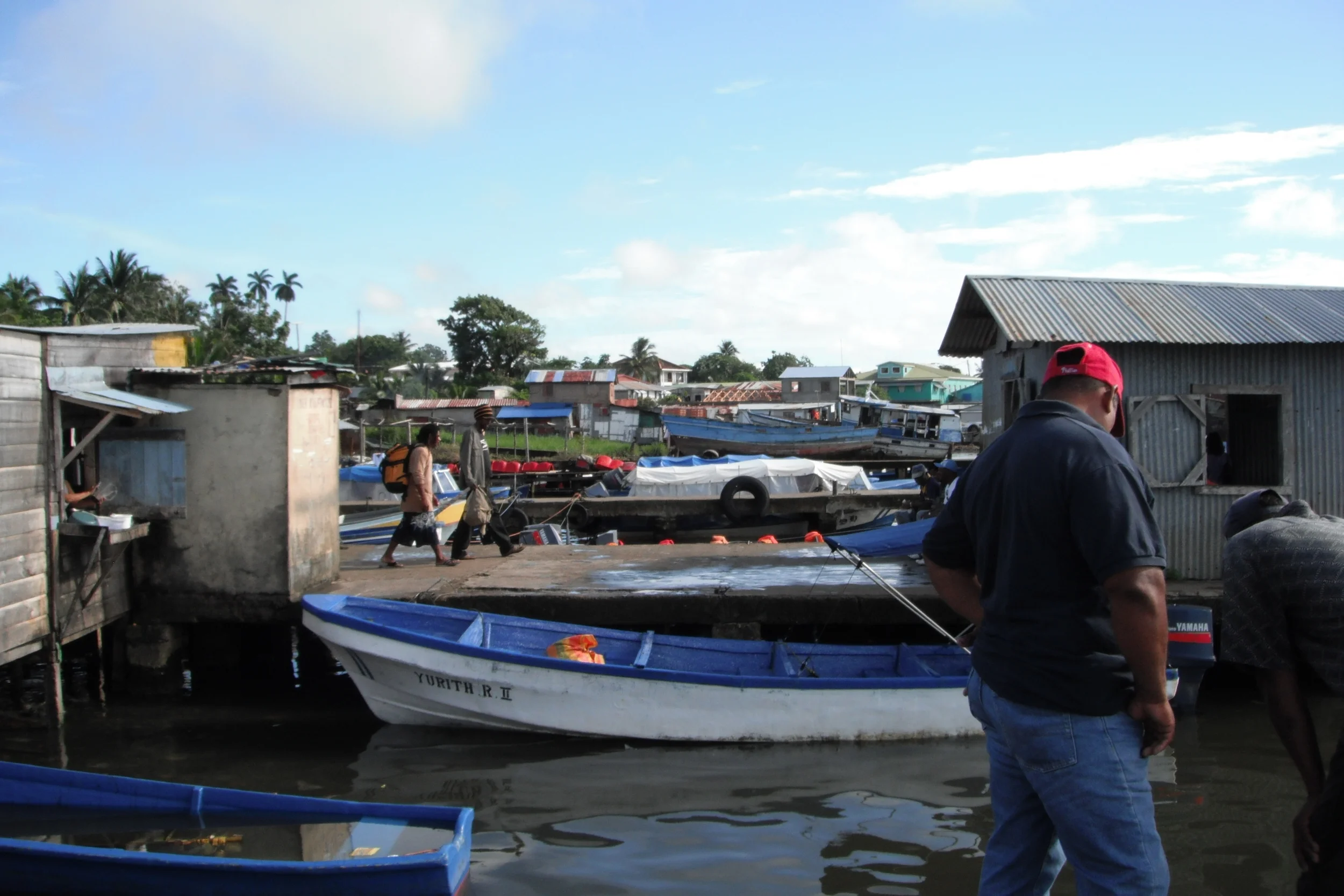
South American farmers grow most of the world’s coffee by far. However, other parts of the world are attempting to enter the market as global demand for beans increases. I have been living in northern Thailand for part of this Fall Semester. While I miss home dearly, I encountered a surprisingly familiar sight upon arrival in my new home, Chiang Rai. Coffee shops line every street, filled with patrons excited to sample local baristas latest creations.
Talking with my new colleagues and traveling more extensively confirmed that coffee has skyrocketed in popularity over the last decade. The Thai government introduced the plant as recently as the 1970s to provide viable alternative crops to the previously lucrative Opium Poppy, another commodity that emerged from trade with Western powers. The northern provinces’ cooler temperatures, even more temperate in its foggy mountains, are highly suitable for Arabica production. Aso, these areas are home to Thailand’s Hill Tribes, ethnic groups that core Thailand has tended to ostracize. Robusta production has also increased in the southern provinces. In both cases, coffee’s potential as a state-approved product suitable for export and open for investment has been oft-touted as the solution to poverty, especially in the north.
The truth has been more complicated. While most of the post-introduction coffee has been consumed domestically, the lion’s share of the market has gone to industrial Robusta growers in the South. The Thai government has championed an intensive agricultural regime for most southern crops, and coffee is no exception. This means monocropping, paired with the use of industrial pesticides, which inevitably leads to landscape degradation. While the North’s Arabica is high-quality, producers encounter many of the same issues as small-scale farmers elsewhere: potentially exploitative processing chains and low returns that make investment difficult.
However, the more recent boom in local cafes and specialty roasteries has begun to show movement towards a more equitable market, especially in the north. I’ve had the honor of meeting several entrepreneurs growing direct-trade coffee businesses, attempting to bridge the gap between mountain-based growers and new shops in the valleys. This is something of a unique situation; most countries currently producing high-quality coffee tend to find themselves beholden to the overwhelming demand from the West, limiting the market capacity for a domestic specialty market that would distribute benefit to more local people. In this sense, Thailand’s relatively late entry into the world of coffee may be a blessing; that is if business people like my new friends continue to do their crucial work.

New Partners and New Loans
By: Matthew Feighner, BS Horticulture 2022
An announcement of our new field partnership with Vilma Garcia. We also announce our most recent loan to Johanna, a tortilla shop owner who is looking to expand her business.
By: Matthew Feighner, BS Horticulture 2022
Spartan Global is excited to announce our new field partner in Guatemala, Vilma Garcia. Our relationship with Vilma began because one of our student team members had known Vilma for a long time through mutual family-friends. Vilma spent a portion of her childhood in the United States, and, as a result, she is bilingual and is well-acquainted with American culture. When revisiting the U.S., Vilma raises money for children’s school supplies and helps market products, like textiles, made by people forced to live in the Guatemala City landfills. In her home country, Vilma has deep roots and loves to help her community. We are excited to further both Spartan Global’s and Vilma’s mission and enable sustainable development and empowerment for those living in poverty.
Our first loan with Vilma is to a businesswomen named Johanna. For the last year, Johanna has run her own tortilla shop. She has been quite successful and has built up a solid customer base in her community. As such, Johanna decided to expand her business into a restaurant. The restaurant will serve pizza because there are no local pizzerias in the community, as well as local favorites, including hilachas, estofado, buche, and caldos.
The expansion requires Johanna to purchase a pizza oven as well as tables, chairs, and tableware to accommodate guests. Thus, Spartan Global has partnered with Vilma to loan Johanna $1,039, with a repayment period of one-year, to make Johanna’s business plan a reality. Given her previous business success and her plans to market through existing social networks, we are confident that Johanna will be successful in her business expansion endeavors, and we are excited to watch as Johanna implements her plans and grows her business!
Spartan Global has always prided itself in being a relationship- and trust-based organization. We are very excited to continue this tradition with Vilma as our new field partner and friend in Guatemala. Vilma’s existing relationships and passion for community and economic empowerment in her community will be long-standing assets to our continuing relationship and her community. We look forward to continuing to develop our relationship with Vilma in the months and years to come and hearing about the progress Johanna makes in expanding her business with the support of this microloan!
Sustainable Business in Guatemala
By: Madeline Malpass
A recap of our conversation with Tom Heffron. He is someone who focuses on sustainability in the industry to slow and reverse the climate change our world is facing.
By: Madeline Malpass
In recent years, the issue of climate change has been brought to light. Our world is changing, and with that comes individuals and businesses working to incorporate sustainable products in an effort to allow individuals to live sustainable lifestyles. Tom Heffron is one of these individuals who focuses on sustainability in the industry to slow and reverse the climate change our world is facing.
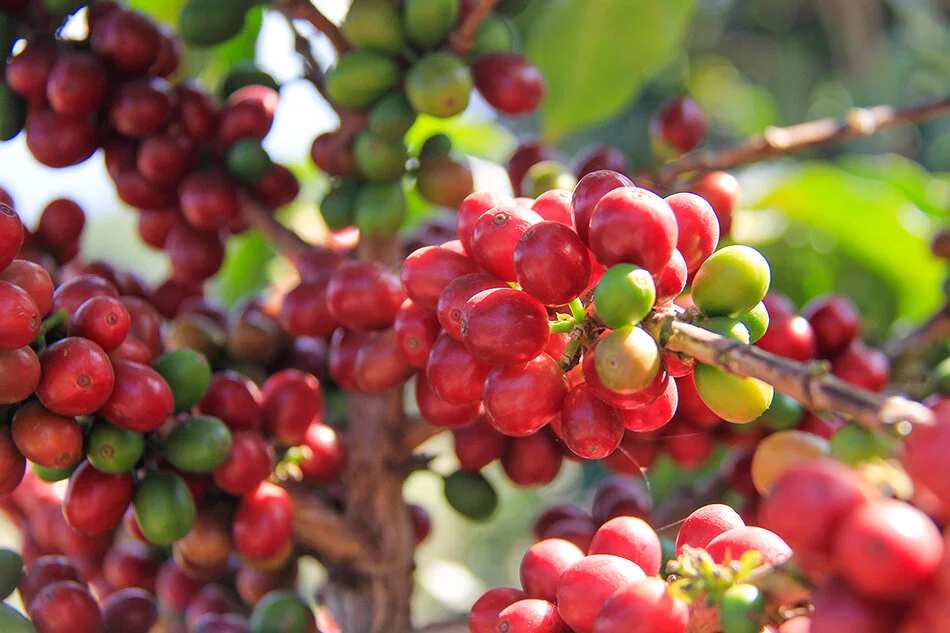
Spartan Global was lucky enough to have Tom attend one of our meetings to discuss our topic for the month, sustainable business and a changing climate. Tom is an MSU alumnus who focused on Latin American studies, attended law school, and now lives in Guatemala and owns a coffee company: MI Guate Select. A second business that connects growers with the market created by MI Guate. Tom focuses primarily on the supply chain and expansion of business in Latin America. His company connects with individual, small-medium-sized Guatemalan Coffee farms and provides access to the supply chain.
For Tom, sustainability means two things. First, a business can sustain itself; secondly, a business’s ability to do business without irreversibly damaging the world’s ecology. Coffee farming is a highly water-intensive industry, meaning that farms must be near a water source. However, many times, runoff from the farming process is absorbed back into these sources, leading to pollution and degradation. Tom’s role is to ensure that coffee farmers can access water-efficient processing equipment that can recycle water and do not pollute. Even though coffee farming can cause degradation, more macro-level climate changes profoundly affect the industry and its farmers through no fault of their own.
Additionally, Tom discussed the role of elevation and climate change within the coffee industry. Many coffee plantations are located at higher elevations, where the air is brisker, and the temperature is perfect for higher quality beans. However, the climate is rising, meaning that the quality of beans is degrading. Tom predicted that high-quality coffee would have to be grown higher and higher in elevation, creating more overhead.
Tom contrasted his business with large companies such as Starbucks. These corporations work to connect with growers, and Starbucks themselves started by creating these equitable relationships. However, Starbucks works to import and create bulk access to cheap, high-quality, and in doing so, no longer produces these honest relationships. However, Starbucks does work to support sustainable farming practices.
Tom also discussed the importance of sustainable finance. He stressed that microfinance is essential to business and knowing your partners and their goals and ambitions. Tom believes that microfinance should continue in Guatemala to help equity on multiple fronts, including gender equality, as women have been proven to be more reliable lending partners.
Tom’s experience and insights on sustainable business and a changing climate are crucial to the work Spartan Global is doing. From microfinance to climate change, Tom’s insights were a great way to close out this challenging year, and we look forward to what is to come in 2021!

Colonialization of Technology
By: Solomon Kronberg, BA Economics and Comparative Cultures & Politics 2022
Our conversation with Dr. Catharyn Baird this month raised exciting questions on the role of the internet as a tool for ethical understanding in international business.
By: Solomon Kronberg, BA Economics and Comparative Cultures & Politics 2022
Earlier this month, SGDF was lucky to host Dr. Catharyn Baird, founder-creator of the EthicsGame, for the third time. Her unique integration of philosophy and business ethics provides a cutting-edge perspective to apply when dealing with moral questions as a team, an essential skill set in our changing business world. During her visit, Dr. Baird discussed her work in a new ethical arena; the role of technology as interconnectedness becomes the norm.
Dr. Baird began her talk by describing the process of community creation. She believes that all communities must answer three core questions: who is a person, who owns what property, and what are the proper uses of power? These are universal questions, and each condition the others’ answers. Ethicists try and determine the best solutions that apply to the most groups, which they term hyper-norms. However, in reality, all communities reach different ethical conclusions. These distinct answers are micro-norms, ethical agreements that coexist in our world, along with the groups that create them.
These ideas have fascinating implications in the realm of international relations. Multi-national hierarchies arise with globalization, and the search for hyper-norms feels their influence. Dr. Baird described how hyper-norms are often relative because they emerge from the micro-norms influencing ethicists world-wide. Philosophers intend hyper-norms to be universal; however, their relativity creates ethical hierarchies. Thus, powerful actors can use the concept to make unilateral decisions about acceptable behaviors. With this in mind, how can we figure out what good values are? Who should determine what good behaviors are? How can you build trust in a supply chain when ethical perspectives overlap and conflict?
Dr. Baird reminded us of the increasing role of technology. Specifically, the internet simultaneously complicates and expands these questions. She described a new project based on a people-centered internet, expanding knowledge sharing and production to as many groups as possible. To best synthesize new knowledge, internet providers must understand what people have, what they need, and who can provide it. Communication throughout the expansion process is critical. Dr. Baird’s Ethical Lens perspective helps actors understand the micro-norms that inform their approach to interactions with people operating from different views, a negotiation space she calls the ethics of ambiguity. When working in this space, small acts of compromise and humility create a synthesis process. Equitable internet access drastically increases opportunities for the ethics of ambiguity to play out, which Baird believes will undermine hegemonic biases in tech and ethics.
In my opinion, Dr. Baird’s philosophy is impressive and relevant because it focuses on fluid questions as tools for understanding rather than broad, static claims on the nature of social reality. Because I respect her work, I’m honored that she considers SGDF to be a skilled actor in the ethically ambiguous space. Working with people from diverse backgrounds and value systems requires flexibility, and using tools like EthicsGame helps us do our best work.

Higher Grounds
By Dan Dolinka
Chris Treter, the founder of Higher Ground Trading Company, visited us at the end of February to tell us about his business’s role in international development. Read on to learn how HGC got started and what they’re currently up to!
By Dan Dolinka, BA Marketing 2021
Higher Grounds Trading Company is a coffee roaster, distributor, and café in Traverse City, Michigan. Higher Grounds is Fair Trade certified, a B-Corp, and most of their coffee is organically grown. Higher Grounds’ Chris Treter spoke with SGDF about their mission and the role they play in global development.
Their story begins in Mexico, where Chris Treter, Higher Grounds founder, began a relationship with the farmers who would one day become exporters of the coffee that Higher Grounds uses. Alongside their coffee business, Higher Grounds operates a co-op and a non-profit that works to establish a better lifestyle for the farmers and the communities that they buy from. With Higher Grounds’ operation came a mission-to end inequality. The business aims to set communities up for better self-sustainment through paying a premium even over Fair Trade standards, and empowering the coffee farming communities through their co-op, and improving their standard of living.
As Higher Grounds has grown, they have taken increasingly bold initiatives. They currently purchase coffee from communities in the Congo, where war and violence threaten the lives of those in the community. Violent conflict also threatens Ethiopia’s Virunga National Park and the surrounding communities along with half of the world’s remaining Mountain Gorillas. Higher Grounds invests in this area and their non-profit, alongside the UN, assists these communities by providing financial security.
A major concern for those involved in businesses with global ties is avoiding simply extracting from thesecommunities, as colonialism has done for so long. Chris and Higher Grounds focuses heavily on relationship building with their global partners to create a functional and progressive relationship. Trade alone is not enough, which is why Higher Grounds has long focused on building helpful, long-term initiatives that serve the communities from which they source. One particularly memorable and significant initiative that Chris recollected while speaking to SGDF was an education project in Ethiopia that provided women with the education necessary to be independent and increase their quality of life significantly. This initiative markedly improved many women’s outcomes, especially by reducing the number of marriages that can lead to assaults.
As February ended, Higher Grounds summarized SGDF’s monthly theme of International Development well. Higher Grounds is an organization that goes beyond Fair Trade standards and expectations to serve their coffee-growing communities. While Higher Grounds plays a small role in an industry built upon extraction, exploitation, and human rights issues, they serve an outsized role in moving the industry to a better place. Their example shows how a global business can simultaneously grow and be responsible to its stakeholders. Thanks to Higher Grounds and Chris Treter for coming to speak with us this February, and we all look forward to seeing what comes next.

International Development: Assumptions and Change
By Solomon Kronberg, BA Economics and Comparative Cultures & Politics 2022
International development is a complex topic. In today’s world, we all participate in the process, making it vital to understand.
By Solomon Kronberg, BA Economics and Comparative Cultures & Politics 2022
Earlier this month, the SDGF marketing team discussed what kind of material we should provide while covering international development this February. Madeline, our marketing director, made an important point: we had to define international development if we were going to do good work. So, we set about trying to do just that. What is international development and why should we care? What role does Spartan Global play? Development affects all of us, which makes answering these questions important for our organization and everyone else.
So when people say international development, what do they mean? As a noun, development is used to indicate economic or social evolution. Most consider the spillover of new technologies and ideas about how they should be used as development’s backbone, creating profitable markets and therefore opportunities for prosperity. If we treat development as a verb, it refers to ‘doing’ development or creating these changes. But who’s doing this pushing? It comes from a plethora of directions; however, international development implies the importance of countries and the relationships between them. Government agencies, like USAID, and government-funded NGOs, like the World Bank are usually the ‘big movers’ in international development. They enter agreements with governments, trying to create the conditions for economic growth through investment and advising. Smaller NGOs and private businesses play a role as well by investing, trading with international partners, and many other practices. The United States’ government has been deeply invested in ‘doing development’ since the end of World War II, investing billions of dollars around the world. Whether it’s by purchasing products made in other countries or paying taxes, US citizens are involved in international development.
It seems logical that the march of time would bring more prosperity and economic interconnectedness, making development as I defined it seem natural or inevitable. But looking at international development critically raises questions about the way certain actors ‘do development.’ Consider for a moment: what if economic relationships were political, which in this case means factors other than social welfare and efficient resource use affect the exchange of goods and capital? Applying this perspective to development raises troubling questions. For example, we often assume that the United States and other countries are acting ‘charitably’ when investing in developing countries. However, the result of this development tends to take the form of slumification as developing economies specialize in cheap goods made in dangerous factories. To assume that ‘industry specialization’ and other hot-button economic strategies are the only way to create prosperity is misleading, but international investment comes with the expectation that developing countries will adhere to those conventions. Why are these policies mandated? If we return to the idea of economics as political, it would follow that developed countries ‘do development’ in a way that benefits them. Cheaper imports and increased demand for profitable exports are some of the macroeconomic benefits developed countries reap from our economic perspective and power to force other countries to accept it.
Given the inherent difficulties I’ve described, how does Spartan Global fit into international development? Our organizational ethics are based on the idea of economics as a political system, meaning we seek to act respectfully, equitably, and sustainably in our partnerships with international partners. The organization’s lending model is centered around zero interest rate microlending, reflecting our prioritization of relationships over profit. We lend to entrepreneurs who take prosperity into their own hands. They’re inspirational business people who create ventures that fit their ambitions, simultaneously battling impoverishment and the economic mandates of those who ‘do development’ and cause harm.
Thank you for reading. Please check back next month for more education initiative publications!

Spartan Global Students Take Action in Support of the “Black Lives Matter” Movement
By Paulette L. Stenzel, Professor Emeritus of International Business Law and Sustainability and advisor to Spartan Global Development Fund (SGDF)
Professor Stenzel shares her thoughts on the SGDF Student Team’s Black Lives Matter statement. She also recaps our 2020 lending.
By Paulette L. Stenzel, Professor Emeritus of International Business Law and Sustainability and advisor to Spartan Global Development Fund (SGDF)
During this past year of turmoil, our Spartan Global Development Fund (SGDF) chose to respond to and support the Black Lives Matter (BLM) movement by issuing a careful and heartful statement. Their statement articulates the value we place on respect for others no matter what their race, ethnicity, or background. This is deeply important to us internally and in our interactions with others around the world.
By way of introduction, it is important to note that SGDF funds microloans around the world to people of diverse races and backgrounds. Our direct loans totaling over $30,000 have gone to indigenous neighbors in Nicaragua and Guatemala. Additionally, SGDF and members of its KIVA lending team have made loans totally 2,947 loans totaling $78,450 to small businesses in 82 countries. (See https://www.kiva.org/team/spartanglobal/impact) Moving forward, we will continue to strive to be as inclusive and diverse as possible in all of our activities.
Here is the thoughtful statement compiled by SGDF students. I am proud of them for including this statement and the plans described in it as part of SGDF’s work this academic year.
Friends,
Spartan Global is an economic development organization. This is our simplest definition. Its implication is that inequality not only exists in the world but that inequalities are often rooted in injustice, thus warranting action to rectify them. To be a member of Spartan Global, a student must accept this premise.
We are a cosmopolitan association. We do most of our work in other nations. However, moral consistency requires that we view injustices in the United States through a similar lens. For centuries, the United States has been riddled with institutional patterns of violence against the Black community. The protests following George Floyd’s murder at the hands of police officers are an unprecedented reaction to these injustices.
Spartan Global values diversity in opinion, race, ethnicity, and background. We will never discriminate against a partner or member based on such characteristics. However, there is such a thing as evil. What happened to George Floyd was evil, no political allegiance or neutral stance alters that fact. The actions taken by protesters in order to combat this evil are unequivocally justified and they have our total support.
Spartan Global will take action to educate its members and community about the importance of diversity as well as racial injustices that plague America. We will strive to improve our members’ awareness of these issues in order to create a more effective team. We are searching for an MSU professor who specializes in racial issues and Black history in America to give a guest lecture to Spartan Global’s members in the fall. We will also be revamping our New Member Program to include educational material on the topic of racial injustices Black Americans experience every day.
Spartan Global’s goals are to create lasting relationships, enable sustainable development, and do our part to foster a more equitable world through micro-finance. It is time for us to focus on what is happening in our own backyard. To continue doing business as usual and ignore these issues would be to undermine our mission. This statement is our promise to never settle and to always push our members and Spartan Global community to be more aware, educated, and compassionate. We will be composing letters to our local, state, and national government representatives illustrating the changes we want to see in our community, state, and nation.
These changes have been focused on our internal dynamics as an organization, however, we are in the process of developing external projects that will pursue our updated commitments. There will be updates when we are ready to unveil these long-term efforts. Until then, please educate yourself, your family, and your friends through the following resources.
Keep fighting for what is right.
In solidarity,
The SGDF team
Links:
This link provides links for several other resources, such as petitions, phone numbers for the Minneapolis District Attorney and Mayor, donation links, links to educational resources, Black mental health resources, voting resources, information for protestors, among many other things.
Black Lives Matter website
https://www.change.org/p/mayor-jacob-frey-justice-for-george-floyd
Petition for Justice for George Floyd
https://www.gofundme.com/f/georgefloyd
GoFundMe for the George Floyd Memorial Fund
https://docs.google.com/document/d/1t3xIBIgSwJDEaa37jJRyKG8XAMFvlBtTLFdo7jjTK5U/mobilebasic
A list of Black-Owned Restaurants and More in the Lansing Area
A map showing protests have occurred around the country
Donate to the American Civil Liberties Union.
A list of bail funds for cities across the country, including Detroit.
Books:
White Fragility: Why it’s so Hard for White People to Talk About Racism by Robin DiAngelo
How to Be an Antiracist by Ibram X. Kendi
Between the World and Me by Ta-Nehisi Coates
*Copyright ©2021 by Spartan Global Development Fund and Professor Paulette L. Stenzel. This blog is based on a blog published by Professor Stenzel at http://www.mariposapaulette.com/the-blog/october-25th-2020.It is used here with her permission.
Professor Stenzel's Words on Microfinance, Pre and Post COVID-19
By Solomon Kronberg, BA Economics and Comparative Cultures & Politics 2022
A recap of Professor Stenzel’s presentation to the Spartan Global Student Team. Her presentation covered the history of Micro Finance, why it’s important, and the unique opportunities SGDF has because of it’s student team.
By Solomon Kronberg, BA Economics and Comparative Cultures & Politics 2022
COVID-19 changed everything. If you followed our blog through 2020, you know Spartan Global has been adapting. From moving online to the Guatemala Relief Fund, the team has had to guide the organization in ways we never thought we would. SGDF’s goals have remained the same; providing interest-free microloans to entrepreneurs worldwide. However, a year into this pandemic, we feel we can do more. That’s why we’re launching the SGDF Education Initiative. Each month, the team will choose a topic related to our work and produce different types of free, educational media for your use. We’re doing this to keep adding value, even at a time when fewer people can donate
In the spirit of evaluating what kind of an organization SGDF can be, we thought it would be fitting to spend January engaging with microfinance itself. Our dear friend and longtime faculty advisor, Paulette Stenzel, joined us earlier this week to give a talk on microfinance’s history and future in the post-COVID world.
Professor Stenzel defines microfinance as financial services designed to increase impoverished people’s access to capital, and therefore their ability to do business. In most cases, it moves through microloans; small, low-interest loans to individuals or cooperatives. Interest is significant, as entrepreneurs in much of the world aren’t protected by usury laws, making them vulnerable to exuberant rates and even violence. Professor Stenzel recalled a conversation with Roger Silva, one of SGDF’s earliest partners. He remarked, “el hombre viene todos los días a reclamar el pago” (the man comes every day to claim payment).
Microloans can fill this space, especially through group-lending. Group-lending allows entrepreneurs to share the risk of a loan by forming a cooperative or other communal business. Widely credited with popularizing microfinance on the world stage, Muhammad Yunus discovered this combination’s potential by extending loans to women’s cooperatives in Bangladesh. These loans were not only repaid but fostered profitable ventures and increased gender equality. Professor Stenzel noted that the link between microfinance and gender continues, as women receive, capitalize on, and repay more loans on average.
It is important to note that most microfinance organizations cannot operate with a 0% interest rate like SGDF because of overhead. While most of these rates are appropriate, some organizations use the microfinance label to mask predatory loaning. This is always reprehensible, especially during a time of crisis like this pandemic.
To conclude her talk, Professor Stenzel reminded us of our mission statement: to provide financial assistance to impoverished people and help strengthen communities through increased opportunity. She stated her belief that now is not the time for slowing down for caution’s sake; Spartan Global can use still use our brand of microfinance to do good. She’s right. Economics tells us that if we do our part to boost the world market through investment, we can help dig out of this COVID induced recession. Perhaps more importantly, we can help make someone’s life a little less scary during this strange time.
We hope you enjoyed this month’s microfinance media! Keep an eye out for next month’s Education Initiative topic, stay safe.

COVID Relief Fund Update
By Tyler Spigarelli, BA Supply Chain Management class of 2021
The onset of the Coronavirus pandemic has drastically affected every part of the globe. In March, strict lockdowns were put in place to help stop the rapid spread, and businesses were forced to shut down. These shutdowns put a significant amount of stress on many of Spartan Global’s previous loan recipients in Guatemala…
By Tyler Spigarelli, BA Supply Chain Management 2021
The onset of the Coronavirus pandemic has drastically affected every part of the globe. In March, strict lockdowns were put in place to help stop the rapid spread, and businesses were forced to shut down. These shutdowns put a significant amount of stress on many of Spartan Global’s previous loan recipients in Guatemala. Already facing limited access to important resources, a complete shutdown could not be sustained even in the short term. Through direct communication with our organization’s field partner in Guatemala, we learned of the immense stress these loan recipients were facing in trying to continue business operations while also providing for their families.

Food bags consisting of corn, rice, and various cooking materials
SGDF quickly shifted its’ focus to address the newfound challenges presented with the pandemic, the effort was spearheaded by member Toby Valentino. To maximize our impact during the pandemic, we decided to cease micro-loan operations in March and focus all our energy on establishing a COVID relief fund for our loan recipients.
We set out to raise $5,000 for food bags and spending cash for 10 previous loan recipients. However, SGDF received more support for the COVID relief fund than we could have imagined, truly allowing us to make a difference where it mattered most. Thanks to the tremendous generosity of our donors, we were able to not only provide cash and food bags to several different families, but also supply sewing materials for the production of masks.

Masks sewn by the Nahuala Weaving Cooperative
After an amazing five months of COVID fundraising, SGDF has shifted its focus back to micro-loans at the start of the fall semester. The COVID relief fund turned out to be a huge success and we are incredibly grateful to all those who offered their support. The majority of the food bags, cash, and mask materials have all been distributed at this point in time to the loan recipients and their families with a few more still on the way! At the end of the day, this pandemic affects all in many ways. May the relief fund act as a sign of hope that together, we can truly overcome any of the challenges thrown our way.
Thank you again for all of the support. We at Spartan Global wish everyone a safe and healthy holiday season!

Learn to Listen
By Toby Valentino, BA International Relations and Economics 2021
In early March, I spent nine days on an Education Abroad program in Guatemala alongside Spartan Global Development Fund (SGDF) members and fellow students at MSU….
By Toby Valentino, BA International Relations and Economics 2021
Relationships

In early March, I spent nine days on an Education Abroad program in Guatemala alongside Spartan Global Development Fund (SGDF) members and fellow students at MSU. Since our arrival back in the states, I have spent some time pondering what I learned during my time in Guatemala. Throughout this process, I have come to a few conclusions. First, I won’t be able to accurately capture my feelings or emotions expressed during my time in Guatemala in words or cohesive sentences and that is okay. Second, what truly made this trip special was the level of human connection I felt throughout. The conversations I had, time spent with others, food shared, and work we accomplished amounted to an unforgettable experience. This is a sentiment I will carry with me forever through a quote written by a friend on the box of a coffee mug gifted to me; “Relationships are the most important thing in life.” With that being said, I want to discuss the importance of asking thoughtful questions about the needs of others and listening intently to the responses you receive.
Sergio de la Paz
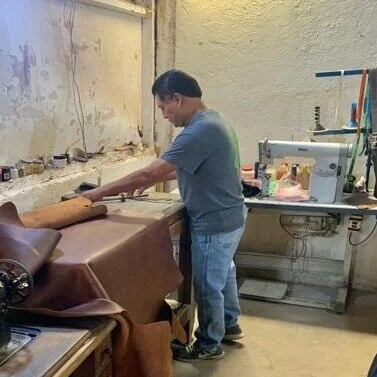
On the second day of our trip, we set out to meet Sergio de la Paz, a leatherworker and SGDF loan recipient living in Antigua, Guatemala. Sergio works out of a small shop in his home where he makes specialty leather products ranging from wallets and keychains to large saddlebags and backpacks. Walking into his workspace, his needs seemed obvious to me. If he wishes to expand his business, he needs a larger workspace with more employees. Sergio spent hours showing us the process of constructing a leather wallet, while discussing the ins and outs of his business. When I got the chance to ask Sergio what he needed to increase growth for his business, his answer surprised me. With his loan he was able to grow his business to a steady level, but he is now looking for an online marketplace to sell his products. If SGDF were to give him a loan to build a larger workshop, Sergio would still have the same problem finding a market and end up in the same economic position. My preconceived notions about his needs would have left him a larger workshop with no market to sell his products and no agency for himself and his business.
Angelica Hernández
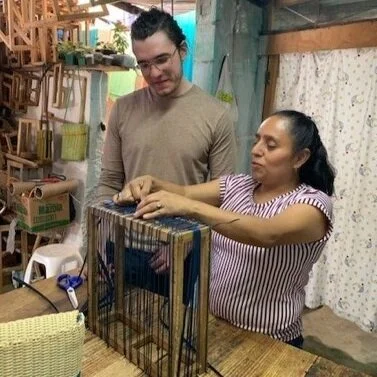
We went on to meet Angelica Hernández, a woman who runs a basket weaving business with her husband. Her beautiful baskets are made out of string from recycled plastic bottles. Angelica started the business when her husband was in an accident that left him unable to work. Originally, the business was a way for their family to make ends-meet. Now, Angelica teaches basket weaving classes while running the business with her husband. During the eruption of the Volcán De Fuego in 2018, the local government asked Angelica to teach basket weaving classes for those fleeing their homes. We got the chance to make our own baskets with the help of Angelica, her husband, and their son. Each basket takes anywhere from 1-2 hours to construct for experienced weavers. It took me upwards of 6 hours to construct my basket, giving us more than enough time to ask Angelica questions about her business. I asked her the same question I asked Sergio: what would help you grow this business? Angelica said capital for more materials is the next step to growing her business and fulfilling larger orders.
Angel Cataví, Fidelina Cataví, Brenda Cataví, and Ronny Cataví

Angel (not pictured) is an SGDF loan recipient who has used his loan to grow his avocado business. When visiting Angel’s sister (Brenda), mother (Fidelina), and brother (Ronny), we talked for hours about the family avocado business, including their successes and challenges. We spoke about their plans to open a restaurant that will offer breakfast, snacks, and lunch. It was clear they look forward to working together as a family. Angel’s sister, Brenda, explained that their business needs include a roof, a floor, and a refrigerator to keep food from spoiling. After speaking with Angel’s family, we gave Fidelina a loan of $5,000 Quetzales ($600) to fund their restaurant business. Something special about microfinance done right is the trust built within each new relationship. I left feeling confident, but not because I could guarantee the success of their business. I left feeling confident because I knew Angel’s family had the opportunity to pursue their own goals rather than goals prescribed to them by others.
Giovani Cáseres

Giovani owns and operates a car repair shop in Guatemala. He has received two loans from SGDF in the past. The first he used to purchase an engine lift and the second helped finance the purchase of an air compressor for paint repairs. We had the opportunity to meet Giovani and speak with him about his business and his plans for the future. Giovani was recently bitten by a dog, which has affected his business significantly. While speaking with him, we learned that he was forced to use his business assets as collateral for a loan in order to afford anti-biotics, all while continuing to support his family. Moving forward, Giovanni needs time to regain his health and eventually go back to work in order to pay his loan to SGDF. I feel grateful to have met Giovani, grateful that he was able to find anti-biotics, and grateful that well executed microloans can offer a safety net to those who need it. This safety net in the form of a loan for an air compressor will help him get back on track after a health scare that for most, would shut down their business altogether.
Real Change

These are just four businesspeople whom SGDF members and students on the Education Abroad program met with throughout our March 2020 trip to Guatemala. To put that into perspective, SGDF has worked with over 3,500 entrepreneurs in 74 different countries since 2009. What I hope to highlight by providing these snapshots are the different needs of each business owner we meet and work with. Sergio is looking for a stronger market to sell his goods, Angelica is looking for more capital for materials, Angel’s family needs a floor and a roof for their restaurant, and Giovani needs extra time to heal from his health scare. It is easy to walk into a business in an impoverished community and prescribe your needs onto that business or that family. It is easy to take away the agency of a business owner or family by telling them what is best for their business. That is not what stimulates sustainable growth within these communities. What stimulates sustainable growth is listening carefully to each person, each family, and each business owner. What stimulates sustainable growth is asking thoughtful questions about their needs and listening intently to their answers. Finally, what stimulates sustainable growth is giving them an opportunity to foster social and economic change within their communities. SGDF may raise the money and extend the loans, but it is business owners like Sergio and families like Angel’s that are making real change within their communities.

Moving Forward in 2020
By Solomon Kronberg, BA Economics, BA Comparative Cultures & Politics 2022
One of the most difficult challenges that face student organizations on every college campus is consistent, long-term success. A group can begin with a stellar goal, great momentum, and effective execution and still struggle as its core members graduate or move on to new endeavors…
By Solomon Kronberg, BA Economics and Comparative Cultures & Politics 2022
One of the most difficult challenges that face student organizations on every college campus is consistent, long-term success. A group can begin with a stellar goal, great momentum, and effective execution and still struggle as its core members graduate or move on to new endeavors. Spartan Global has struggled with the cycle of collegiate change, however, each period of transition has brought us new opportunities and goals.
The 2019-2020 school year has certainly been a time of change. Spartan Global lost the majority of its veteran members to graduation, internships, and study abroad programs. While we, of course, wish them the best, their absence is sorely missed.
Part of what makes SGDF such a special organization is the ability to attract truly incredible people to our system of values. We are truly proud to say that even in a moment of transitional doubt, this strength has shown through once again. With the support of our incredible advisors, Professor Stenzel and Board of Alumni Directors, the newest iteration of Spartan Global has not only solidified but excelled. Already, this semester has seen our Fundraising Team produce an unprecedented amount of loan donations. Our Marketing and Communications Team has not only maintained but expanded our online presence, and expanded our on-campus presence with new educational events. Thanks to the strength of leadership within the New Member and Donor Relations committee, we have more than doubled our membership. It is entirely thanks to these new students and their commitment to the work we do that the organization is thriving–we are immensely grateful to them.
As this new Spartan Global team moves forward into the decade, we believe a restatement of our goals and values is in order. Through the extension of interest-free micro-loans, we seek to enable the success of entrepreneurs in developing communities worldwide. This is a vital pursuit. Through increased access to capital, entrepreneurs are able to more effectively actualize their ambitions and claim their agency–the key to creating a more sustainable and equitable international business-standard. While our initial impact may seem small, we believe that the best way to change the world is by enabling people to change their world.
Stay tuned.

Ethical Lens Inventory
By Madeline Malpass, BA Business, 2023
The Ethical Lens Inventory (ELI) is a personal evaluation tool used to help individuals assess their own values, and how people prioritize those values when making ethical decisions…
By Madeline Malpass, BA Business, 2023
The Ethical Lens Inventory (ELI) is a personal evaluation tool used to help individuals assess their own values, and how people prioritize those values when making ethical decisions. Within the last month, members of the Spartan Global Development Fund were lucky enough to have the opportunity to take this test and to evaluate our individual ethical lens thanks to a generous donation from Professor Baird, the creator and CEO of the Ethics Game.
The dictionary definition of the word ethical states is “relating to moral principles or the branch of knowledge dealing with these.” Individuals make decisions based on their values, beliefs and morals, ethical or not. As students, it’s valuable to understand and discuss where our personal values lay.
The ELI is a series of questions that the test taker must take before they are given a result on the ethical grid. The 4 lenses in question are responsibilities, results, relationships and reputation along with the core values of rationality, autonomy, equality, and sensibility. The results identify how a student prioritizes core values when making ethical decisions.
Professor Stenzel, Spartan Global’s faculty advisor, helped lead a discussion with members of SGDF to compare how each of the student’s ethical lens related to one another. It found that a large number of members leaned towards the community and responsibility spectrum on the grid. Every member's test result was different, whether vastly or slightly, and it demonstrated how differing values help others to work together and achieve more.
After taking the Ethical Lens, members are now educated on how their values are prioritized and are able to understand how other they may not always see eye to eye with one another, but are able to put those differences aside in prioritizing different values in order to reach their final goals.
Spartan Global Hosts Professor Catheryn Baird
On the twenty-ninth of October, Spartan Global was lucky to host Professor Catheryn Baird of Regis University, Colorado. Professor Baird is the creator and CEO of the Ethics Game…
On the twenty-ninth of October, Spartan Global was lucky to host Professor Catheryn Baird of Regis University, Colorado. Professor Baird is the creator and CEO of the Ethics Game, an innovative program, which provides its students with an understanding of their own ethical dispositions and offers the training required to evolve them.
One of SGDF’s primary projects as a non-profit is to support and develop a norm of ethical international business, specifically by ending inequitable trade relationships. We do so by providing funding to entrepreneurs via interest-free microloans. Our founder and faculty advisor, Professor Stenzel of MSU’s Broad School of Business, became friends with Professor Baird through their shared interest in international business ethics–a connection that made our relationship with Professor Baird possible.
During her visit, Professor Baird put our student team through a series of impromptu scenarios she has used to teach ethical business within her program. Her questions were challenging, requiring members to truly evaluate their commitments to certain principles. Questions of ethics are often difficult to answer–they force us to ask ourselves why we believe what we believe and make sacrifices for the greater good. However, it is vital that business-people participate in this activity. It’s easy in today’s world to commit to the “profit-at-all-costs” mindset, often not through choice, but lack of discernment. Interrogation of one’s commitments, asking yourself the hard questions, is the cure. The fact is, sometimes for the greater good, productivity and profit must take a backseat to other priorities. This is the message that both Professor Baird and SGDF seek to share with the world. We will continue our work, challenging ourselves and showing that sometimes the dollar can’t be king.
Best regards,
SGDF
2019 Education Abroad Expo
Mark your calendar: Thursday October 3rd at the Breslin Center 1 pm-5 pm.
Do you want to take your MSU experience beyond campus? Are you interested in learning about sustainable development through microloans?
Mark your calendar: Thursday October 3rd at the Breslin Center 1 pm-5 pm.
Do you want to take your MSU experience beyond campus? Are you interested in learning about sustainable development through microloans?
Right now, Spartan Global Development Fund is looking for people who are interested in joining our annual trip to Guatemala. This trip will provide you with an opportunity to meet with loan recipients like the Chacaya Coffee Cooperative while collecting credit for courses like FI 491 and GBL 491.
Founder and Professor Paulette Stenzel will be joined by current members of Spartan Global at the 2019 Education Abroad Expo taking place in the Breslin Center this Thursday (10/3) between 1-5 pm. We are excited to meet you and answer your questions about this year's Guatemala Trip and about our nonprofit organization, Spartan Global Development Fund.
Hope to see you there!

New Spartan Global Loans Sets Milestone & Honors SGDF Member Mitchell Taylor
By Paulette L. Stenzel, Professor of International Business Law and Sustainability, Michigan State University, and advisor to SGDF
Spartan Global Development Fund (SGDF) has reached a significant milestone: Since we made our first package of four $25 loans on July 4, 2009, SGDF has extended over $101,000 in loans to small entrepreneurs.
By: Paulette L. Stenzel, Professor of International Business Law and Sustainability, Michigan State University, and advisor to SGDF

Mitchell J. Taylor
Spartan Global Development Fund (SGDF) has reached a significant milestone: Since we made our first package of four $25 loans on July 4, 2009, SGDF has extended over $101,000 in loans to small entrepreneurs. Our latest package of loans totaling $4,120 has been sent to Guatemala to assist five new or developing small businesses. This landmark set of loans is even more special to us because the loans are dedicated to the memory of Mitchell J. Taylor, beloved member of the SGDF Fundraising and Development Team. With these loans, we celebrate Mitchell’s smile, laughter, and dedication to making life better for others.
Our latest package of loans assists six small businesses in Guatemala. First, Angel, an aspiring farmer focusing on coffee and avocado production, will use his $750 loan for crops and fertilizer. Second, members of the San Antonia Weaving Cooperative will use their $1,050 loan to create new textile patterns to stimulate sales. The funds will pay artists for their unique designs. Third, the Nahuala Cooperative is a small weaving cooperative that is experiencing high demand from wholesalers. A $625 loan will enable the group to market new proprietary.

Examples of Elvira's artwork.
![bifold wallet 2[1].jpg](https://images.squarespace-cdn.com/content/v1/53330cfae4b088cc57b183f2/1530123068738-LBC4AVL0955VROD8JX0K/bifold+wallet+2%5B1%5D.jpg)




Fourth is Sergio, a leather artisan based in Antigua. Sergio plan to use funds from his loan to invest in equipment and materials needed to start a store where he plans to sell leather bags, wallets, and other goods (pictured). Fifth, and finally, is a two-stage loan. SGDF has loaned $673 to Giovanni Caseres, an auto mechanic with many years of experience, for the purchase of an engine hoist. This equipment will enable him to offer full engine rebuilds as compared to only top engine rebuilds that he was able to offer prior to this loan. This loan is unique in that, when repaid by Giovanni after only three months, the funds will be loaned to immediately to pottery artist Elvira. She will use funds for two purposes: mentorship in business financial management, and to purchase materials for unique collectible items related to coffee such as coasters.
These loans demonstrate SGDF’S careful and respectful approach to micro-lending. Working with As Green as it Gets (AGAIG), our field partner in Guatemala, we enable small entrepreneurs to help themselves. Loans are made to meet needs identified by the entrepreneurs themselves, and our terms are tailored to meet the specific needs of the borrower. For example, repayment terms for these five loans range from three months to five years according to the needs of the borrower and type of business involved. In contrast, Angel needs three to five years for newly planted coffee plants to yield a marketable crop, and it takes that long or longer for avocado seedlings to mature and produce fruit.
Beyond meeting the specific needs of borrowers, as always, our loans are interest-free. Moreover, upon repayment, funds are loaned to another aspiring entrepreneur to establish or expand his or her business. When each of these loans totaling $3,370 is repaid, we will lend the funds to another small business person in memory of Mitchell J. Taylor, providing a lasting memory of his contributions through SGDF. With a repayment rate of over 99.9% since SGDF made its first group of loans on July 4, 2009, we know that our programs are sustainable for the long run.
Coffee Direct from Guatemala, Success for a Small Entrepreneur and His Family, and Joy for Michigan State's Spartan Global Students
By Professor Paulette L. Stenzel, Professor of International Business Law, Michigan State University
This coffee was roasted and packaged by Sr. Victor Cataví of San Miguel Escobar, Guatemala in early January...
By Professor Paulette L. Stenzel, Professor of International Business Law, Michigan State University
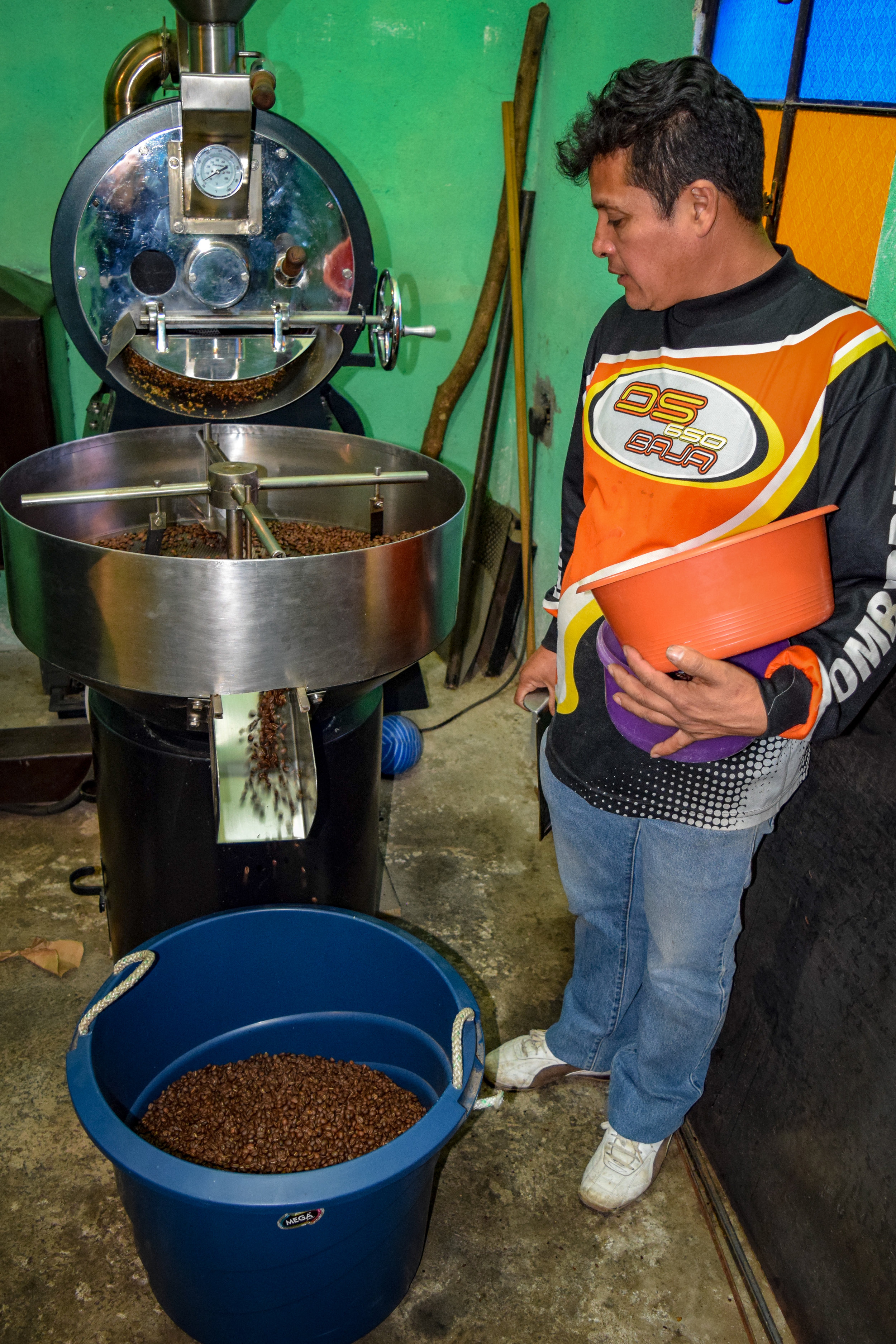
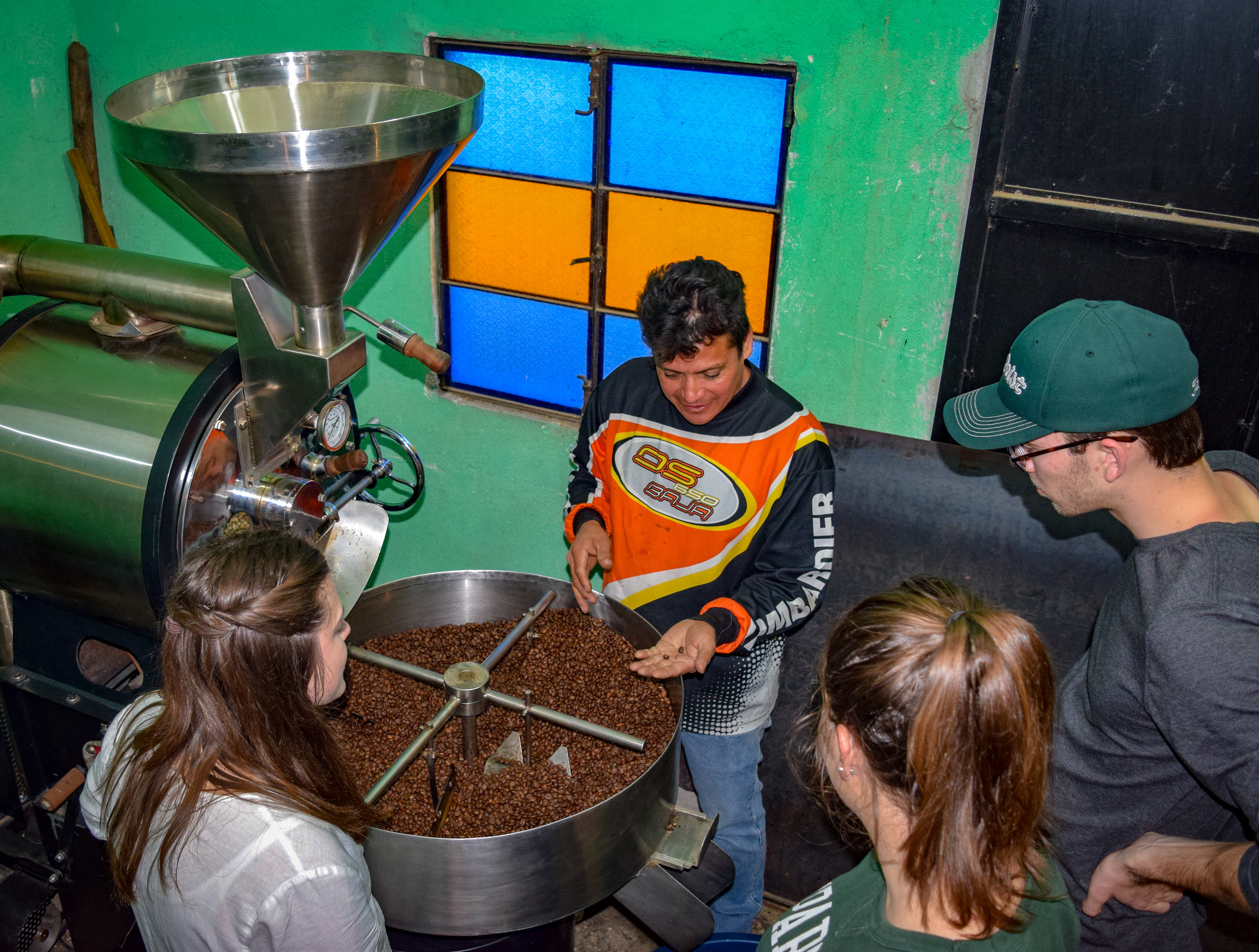


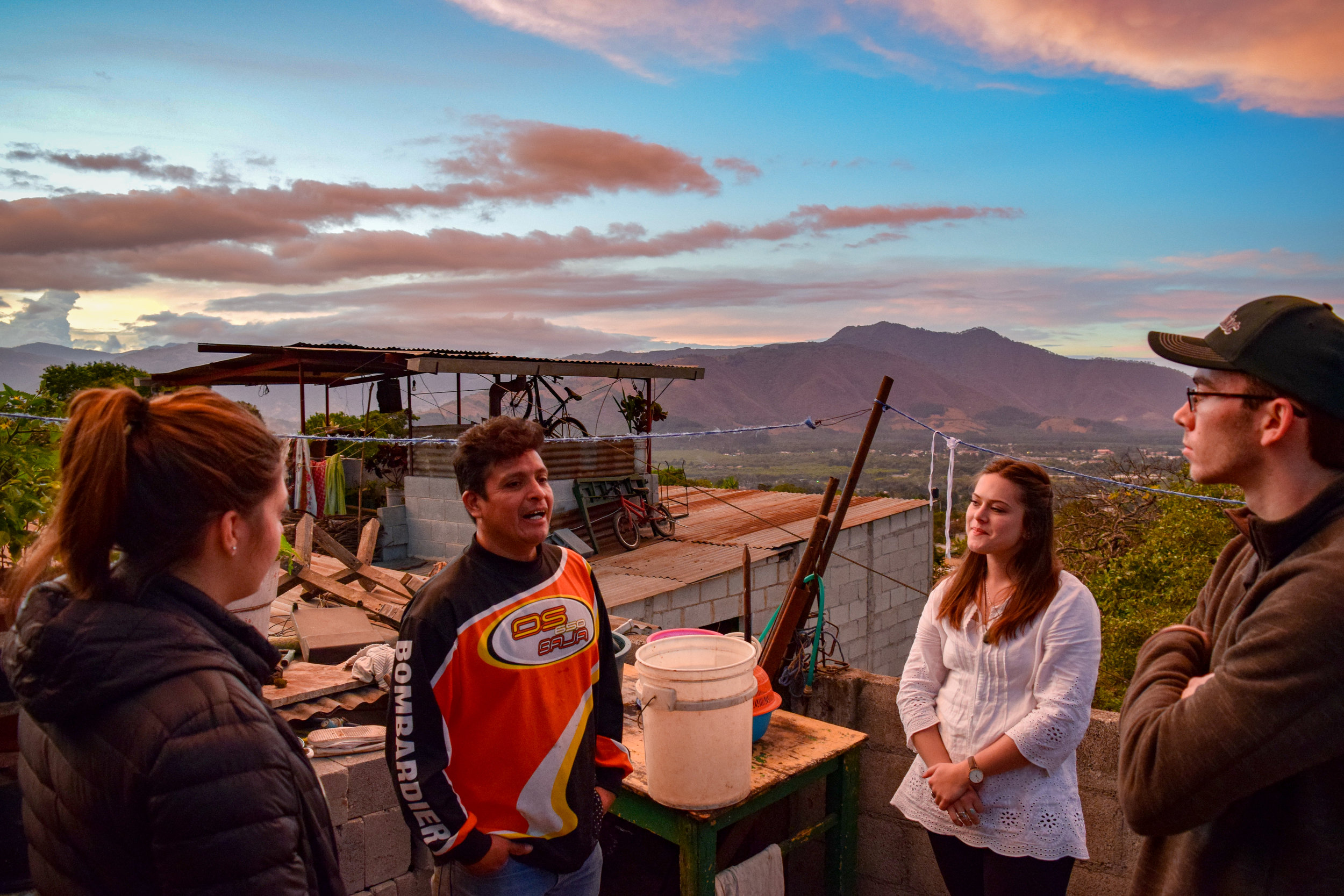
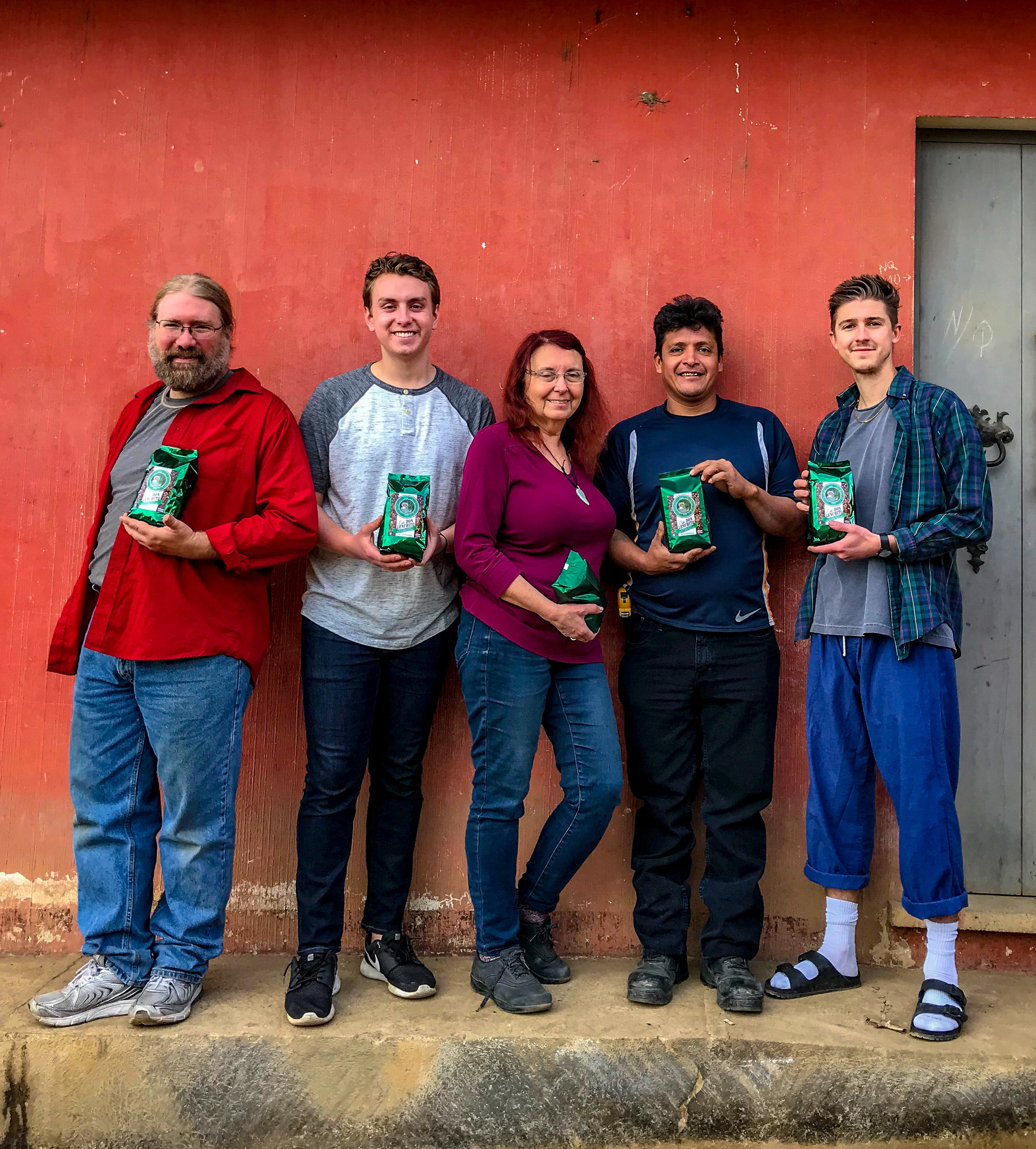
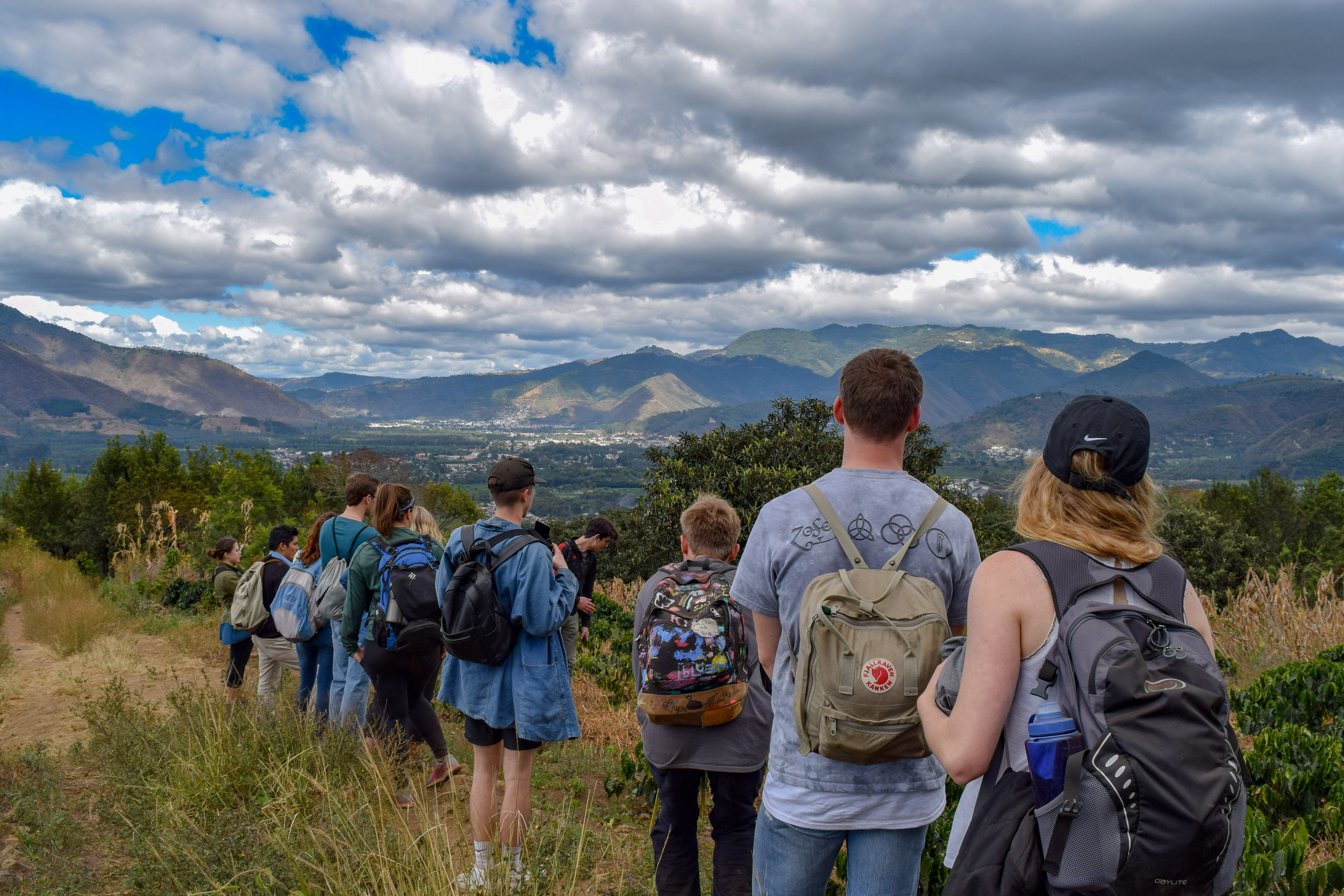
This coffee was roasted and packaged by Sr. Victor Cataví of San Miguel Escobar, Guatemala in early January. He was assisted by our Michigan State University Spartan Global Development Fund (SGDF) students who visited Guatemala over the holiday break 2017-2018. Students learned about the intricacies of and hard work involved in planting, tending, harvesting, sorting, roasting, and packaging coffee. Several of our students stayed with Sr. Victor Cataví and his family while in Guatemala. This gave them an opportunity to nurture friendships and experience family life in Guatemala. I am advisor to the student-led SGDF and a member of the board of directors for its non-profit companion organization, so, of course, I traveled with the group.
Señor Cataví became involved in the coffee industry about around 2015 with the help of SGDF’s field partner, As Green as it Gets (AGAIG). Sr. Cataví did not have any land to grow coffee, so he decided to enter the coffee processing business. This is fitting because coffee is part of his family's heritage. The photo on the bag shown above honors Don Beto, Sr. Cataví’s father who was a coffee farmer.
In early fall of 2016, SGDF made a $1,300 loan to Sr. Cataví to help him purchase equipment to begin processing coffee fruit and to package it for sale. The loan period was set for 24 months, with one lump sum due in August of 2018. To our delight, during our visit in Guatemala, he repaid SGDF in person with $1,300 cash—six months early! What a surprise to receive early payment! And, it is a joy to see him and his family doing so well!

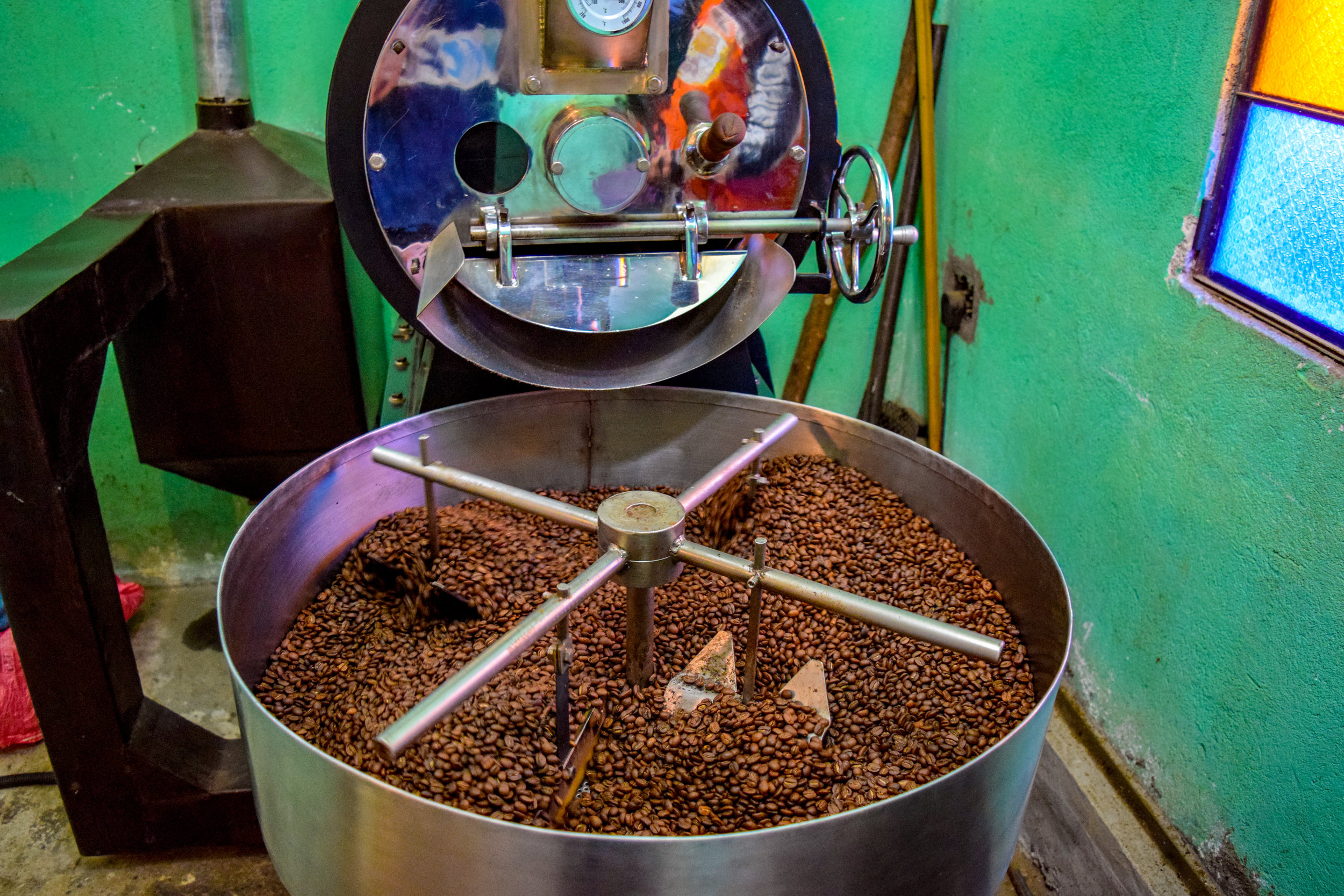
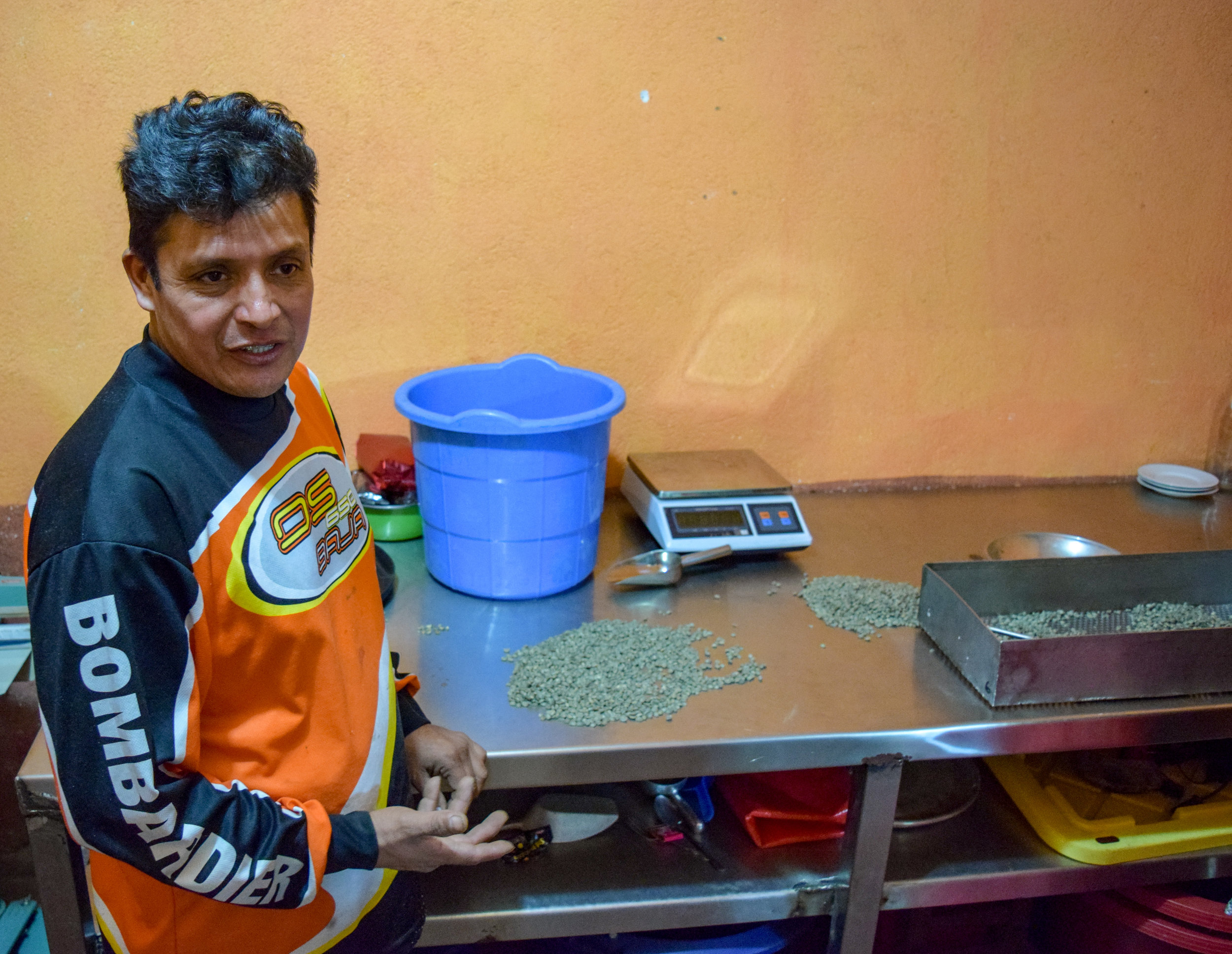

We tailor our loans to fit the needs of each loan recipient. A coffee plant takes about three years from planting to start to give a substantial yield. So, our loan terms gave Sr. Catavi time to find a supply of coffee from nearby coffee farmers, purchase processing equipment, and learn the ins and outs of coffee processing and roasting. In light of the facts that coffee is harvested only once each year and he had no knowledge or capital at the beginning of the loan period, he would not have been able to make monthly payments. Moreover, SGDF does not charge interest. A traditional lender would never have loaned money to a low-income small entrepreneur, and a loan without interest would have been unfathomable.
Moving on, SGDF has already signed a contract loaning some of the $1,300 Sr. Cataví repaid to us to a cardamom farmer. There are new markets for cardamom oil today, and our loan will help a small farmer enter those markets. Moreover, we are recycling our funds and working on other loans.
Thank you for supporting our SGDF students. They are making a difference in the lives of small entrepreneurs and their families and communities in Guatemala and beyond with every loan they make. It’s about giving a hand up, not a hand out. And, if you get a chance, please check out our website: www.spartanglobalfund.org.
Many thanks for your support!
Research Trip to Guatemala
By Jake Sadilek, BA Psychology, 2019
By Scott Lyman, BA Finance and Social Relations & Policy, 2018
As a by-product of Spartan Global’s microfinance initiatives, we the students often feel distant from the loan recipients and their entrepreneurial endeavors. We understand our impact, yet, it can be difficult to see the tangible results of our loans...
By Jake Sadilek, BA Psychology, 2019
By Scott Lyman, BA Finance and Social Relations & Policy, 2018
As a by-product of Spartan Global’s microfinance initiatives, we the students often feel distant from the loan recipients and their entrepreneurial endeavors. We understand our impact, yet, it can be difficult to see the tangible results of our loans. From thousands of miles away, recipients update us with news of their successes - this connection gives SGDF students insight on the impact of our work. To better understand how a microloan changes lives, however, direct engagement with our past loan recipients is best.
From December 27th, 2017 through January 5th, 2018, ten members of SGDF are headed to Guatemala to spend time with our field partner, As Green As It Gets. The overarching purpose is to provide an opportunity for Spartan Global students to interact face-to-face with past microloan recipients and gain on-the-ground exposure to microfinance. The stay will afford SGDF members a full-circle understanding of the microloan process. Participating students will benefit from a first-hand experience of the lives positively affected from our efforts. This is especially important considering Spartan Global’s increased presence in the Guatemalan community we plan on visiting. In the last year alone, we have extended $4,300 worth in interest-free microloans to various entrepreneurs in need of capital to grow their businesses.
We will spend each day with a different microloan recipients to better understand their respective businesses and circumstances. Our first stop will be at the coffee farm of Alberto and Jonny Hernandez; the father and son pair who required funds to help them recover from an infection that decimated their annual coffee crop. The day will be spent orienting ourselves with coffee production, hiking to and assisting with work in the fields. On the following day, we’ll learn about the sorting and processing that takes place before coffee is ready to drink from Victor Catavi. With a $1,500 loan used to purchase a coffee roaster and other equipment last October, Sr. Catavi’s coffee processing business has taken off; in one year, he has seen a 240% growth in profits. During our visit, we will learn of his business model and the factors contributing to his success.
In addition to connecting with supported coffee producers, we will have the chance to spend time with artisans we have supported with microloans. For example, we extended a $1,100 microloan in June of 2017 to Carlos Diaz, a metalworker who transforms wrought iron into decorative art pieces. Not only will we be able to gauge the progress Carlos has been able to make since receiving his loan, we will also be able to try our hands at forging metal.
Additionally, participants on the research trip will spend a day in Antigua touring textile markets and meeting with weavers, textile producers, and exporters to gain an intimate perspective on one of Guatemala’s oldest and largest industries. A day trip to Lake Atitlan is also in order for students to network with established Non-Governmental Organizations (NGOs) and social enterprises to learn how other organizations are engaging communities in the area. The last few days of our trip will be spent touring Tecojate, a small town on the Pacific coast. While our itinerary is still evolving, the trip is sure to leave an impression on both SGDF members and AGAIG entrepreneurs.
We will be filming our experiences and engagements throughout our stay in Guatemala. Upon our return, we will be collaborating with Broad College of Business videographer, Zach Hall, to produce a documentary. In doing do, we will share our experiences with the Michigan State community and our donors. The documentary will show the international scope of learning at Michigan State and how the work of Spartan Global is positively changing lives through microfinance.
SGDF’s trip to Guatemala will provide members with a holistic picture of the microloan process and strengthen ties with our field partner, As Green As It Gets. This new perspective will undoubtedly inspire us to continue advocating for entrepreneurs from underserved regions. We would appreciate any contribution you could afford, whether large or small. You may donate to our research trip here
Lewis Quality of Excellence Award
By Scott Lyman, BA Finance and Social Relations & Policy, 2018
By Jake Sadilek, BA Psychology, 2019
For the second time in the last six years, The Spartan Global Development fund (SGDF) was awarded the Richard J. Lewis Quality of Excellence Award by Eli Broad College of Business for its work during the 2016-2017 academic year...
By Scott Lyman, BA Finance and Social Relations & Policy, 2018
By Jake Sadilek, BA Psychology, 2019

Professor Stenzel and Scott Lyman with The Eli Broad College of Business, Dean Sanjay Gupta, and Amy Moon, Associate Director of Alumni Relations and Engagement for Broad College of Business.
For the second time in the last six years, The Spartan Global Development fund (SGDF) was awarded the Richard J. Lewis Quality of Excellence Award by the Eli Broad College of Business for its work during the 2016-2017 academic year. Awarded annually, the Lewis Quality of Excellence Award recognizes Eli Broad College of Business student organizations or individuals who advance the mission of the college through achievements in continuous improvement and innovation. This honor is awarded to the student organization that best exhibits the following characteristics: innovation, teamwork, benefit to the college, performance metrics, and sustainability.
None of this advancement would have been possible without Spartan Global’s commitment to bringing on dedicated students. Advancing the organization’s mission of facilitating microloans to aspiring entrepreneurs throughout developing regions, while simultaneously raising awareness for microfinance, would not be possible without a strong team; Scott Lyman (BA’18, Social Relations & Policy and Finance), appointed President in October of 2016, was able to assemble a team of high-functioning Michigan State Students in five short months.

Professor Stenzel and Scott Lyman with the Lewis Quality of Excellence Award
The 2017 Lewis Quality of Excellence Award is a big milestone for the organization as it conveys Spartan Global’s presence in East Lansing and in communities across the developing world. As the organization looks to increase its capacity and double its outreach in 2017, Scott and his team will be expanding their scope to include an educational component for new members. This educational outreach will take the form of a mentorship program, which will provide new members with the tools needed to further the organization’s goals and objectives related to microfinance and sustainable development. Moving forward, we hope to continue growing as an organization in order to continue supporting aspiring entrepreneurs around the globe who face systemic, structural, and financial barriers in growing their businesses.
New Momentum
By Scott Lyman, BA Finance and Social Relations & Policy, 2018
By Jake Sadilek, BA Psychology, 2019
Over the past several months, The Spartan Global Development Fund has raised $2,561 from donors to aid aspiring entrepreneurs around the world who face structural, social, and financial barriers to access capital...
By Scott Lyman, BA Finance and Social Relations & Policy, 2018
By Jake Sadilek, BA Psychology, 2019
Over the past several months, The Spartan Global Development Fund has raised $2,561 from donors to aid aspiring entrepreneurs around the world who face structural, social, and financial barriers to access capital. Two loans worth over $2,800 have been extended to Guatemalan coffee farmers and artisans through our international field partner, As Green As It Gets. Additionally, Spartan Global has supported 74 business owners with $1,225 in smaller loans through the online microloan platform, Kiva.
Sparked by new student leadership, this past semester set the bar for years to come. The first milestone came in the form of a $1,378 loan issued to As Green As It Gets in early June 2017. The loan will directly support a father-and-son coffee farming team hoping to recover their coffee crops after a fungal infection devastated their annual harvest. This loan marked Spartan Global’s largest student-led microloan project in over a year, representing the renewed presence of the organization on campus.
Shortly after finalizing the $1,378 loan to support Guatemalan coffee farmers in June, the Spartan Global student team was able to negotiate yet another microloan contract with As Green As It Gets. Worth $1,500, this second loan will be used to help a metal artisan and a motorcycle repairmen grow their respective businesses. Structuring and facilitating these two loans have provided each SGDF member with invaluable experience, and we expect to expand on our successes in the upcoming 2017-2018 school year.
In the upcoming year, we will be focused on facilitating more loans, gaining support among MSU alumni, partnering with local sponsors and corporations, and strengthening the organization as a whole. Through building on the experiential foundation established during the 2016-2017 academic year, we hope to keep our momentum rolling.
In December 2017, we will be visiting our long-standing field partner in Guatemala, As Green As It Gets. Our itinerary includes exploring their coffee production lands and facilities, networking directly with community entrepreneurs, experiencing local culture and cuisine, and studying the businesses of coffee producers and artisans we have supported in the past. Visiting the recipients of past loans Spartan Global has facilitated will provide new insights regarding the impact of our work.
Summer is wrapping up and the fall semester is fast approaching. With the excitement and progress of the 2016-2017 academic year fresh in our minds, we launch into a new year of work.
2017 Update
By Jake Sadilek, BA Psychology, 2019
Domestically, our economic lives are fortunate. Our free market structure makes it easy for aspiring entrepreneurs. We enjoy social safety nets – like welfare programs – that aid the economically disadvantaged...
Domestically, our economic lives are fortunate. Our free market structure makes it easy for aspiring entrepreneurs. We enjoy social safety nets – like welfare programs – that aid the economically disadvantaged. In many places abroad, there are few structures in place to benefit this population; to better their situation, many individuals take the entrepreneurial route.
In the developing world, entrepreneurs face barriers in ascending towards a more comfortable living situation. Many banks in these countries issue loans at exorbitantly high interest rates. A good line of credit is difficult to attain. Entrepreneurs in these countries have limited access to the capital required for starting a business. With a host of domestic inhibitors, these creative individuals often receive vital financial assistance from foreign entities - like Spartan Global Development Fund.
Spartan Global Development Fund (SGDF) uses a powerful tool to actualize its altruistic goal: microfinance. Microfinance entails the offering of financial services to business owners who don’t qualify for traditional loans. With the energy of motivated students, and guidance from professionals, SGDF has used this strategy to extend over $60,000 in non-interest bearing microloans since 2009. Now under new student leadership, SGDF is poised to continue making an international impact in 2017 and beyond.
Current SGDF Project Manager, Scott Lyman, was chosen by the SGDF Board of Directors to lead our student organization in December of 2016. Since then, he has assembled a dynamic student executive board, expanded the organization’s member base, and spearheaded initiatives to further the organization’s goals. With long-time Faculty Advisor and Board of Directors member, Paulette Stenzel, and Board of Directors Chairman, Nikolai Wasielewski, guiding the organization's development, SGDF is striving to fulfill its selfless mission.
The main goal for SGDF this semester is to issue $1,500 in loans to our field partner in As Green As It Gets (AGAIG). AGAIG is a non-profit coffee cooperative in Guatemala that aids local producers with their coffee businesses. AGAIG has been a valued SGDF-partner since 2012 and we are excited to continue connecting with their artisans. In closing weeks of the semester, we are nearing our $1,500 goal. In other progress, SGDF - and others who have lent in our name - has given over twenty loans to entrepreneurs across the world through a microfund website, Kiva.
In just a few short months, the SGDF student group has evolved into a multifaceted team. Our Marketing, Fundraising, and Education departments are devising action plans and looking ahead to new projects; check out the “Who We Are” page to meet the new team. Learn more about
SGDF by exploring our website and social media accounts. Looking to get involved? Drop us a note with the “contact” button at the bottom of the site. Go Green!